
Hallo zusammen,
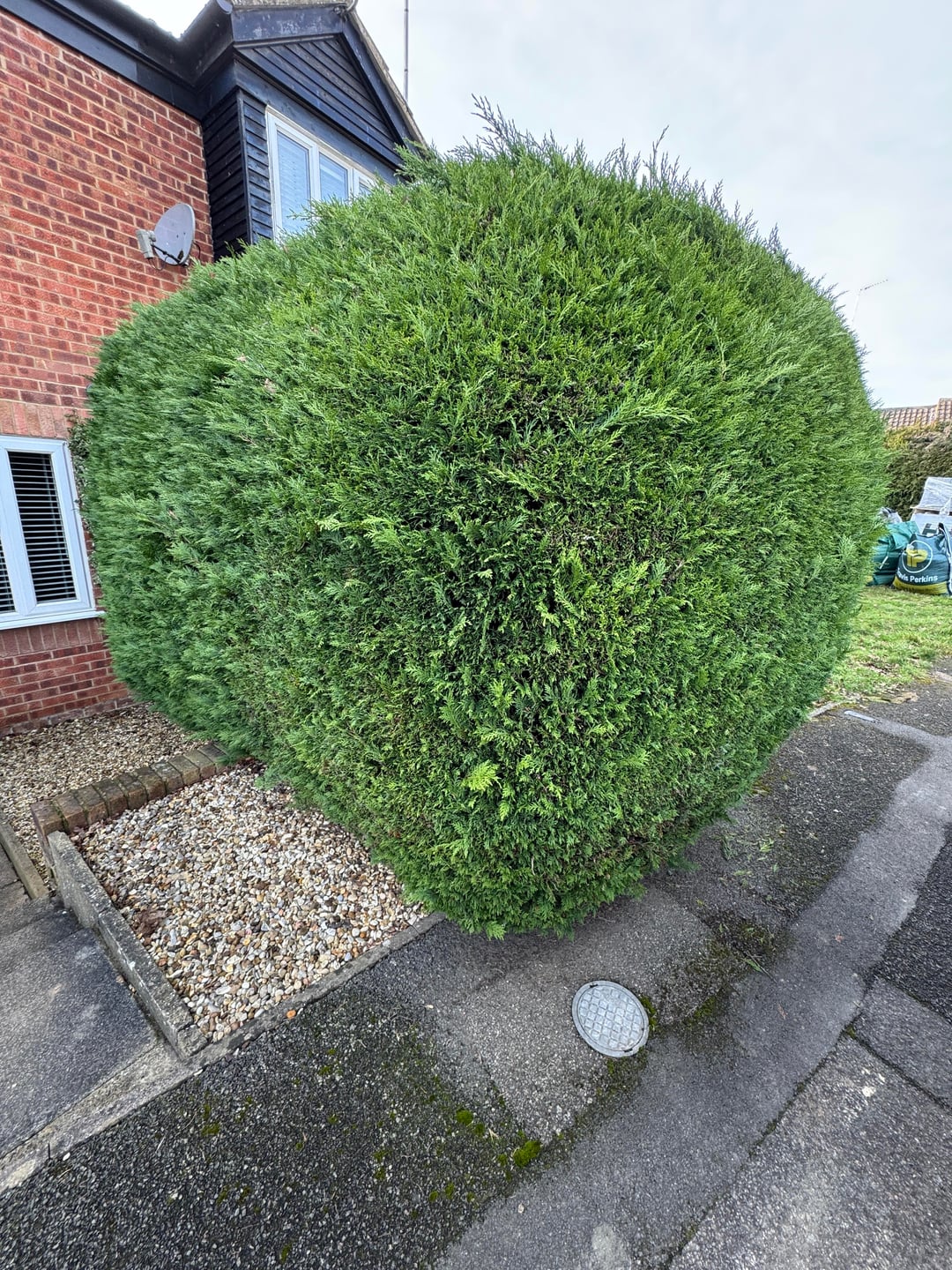
Ich suche nach Ratschlägen für einen Koniferenstrauch/eine Koniferenhecke vor meinem Haus. Er ist im Laufe der Zeit enorm gewachsen und ragt jetzt deutlich über den Bürgersteig hinaus, sodass er aus Sicherheits- und Zugänglichkeitsgründen unbedingt zurückgeschnitten werden muss.
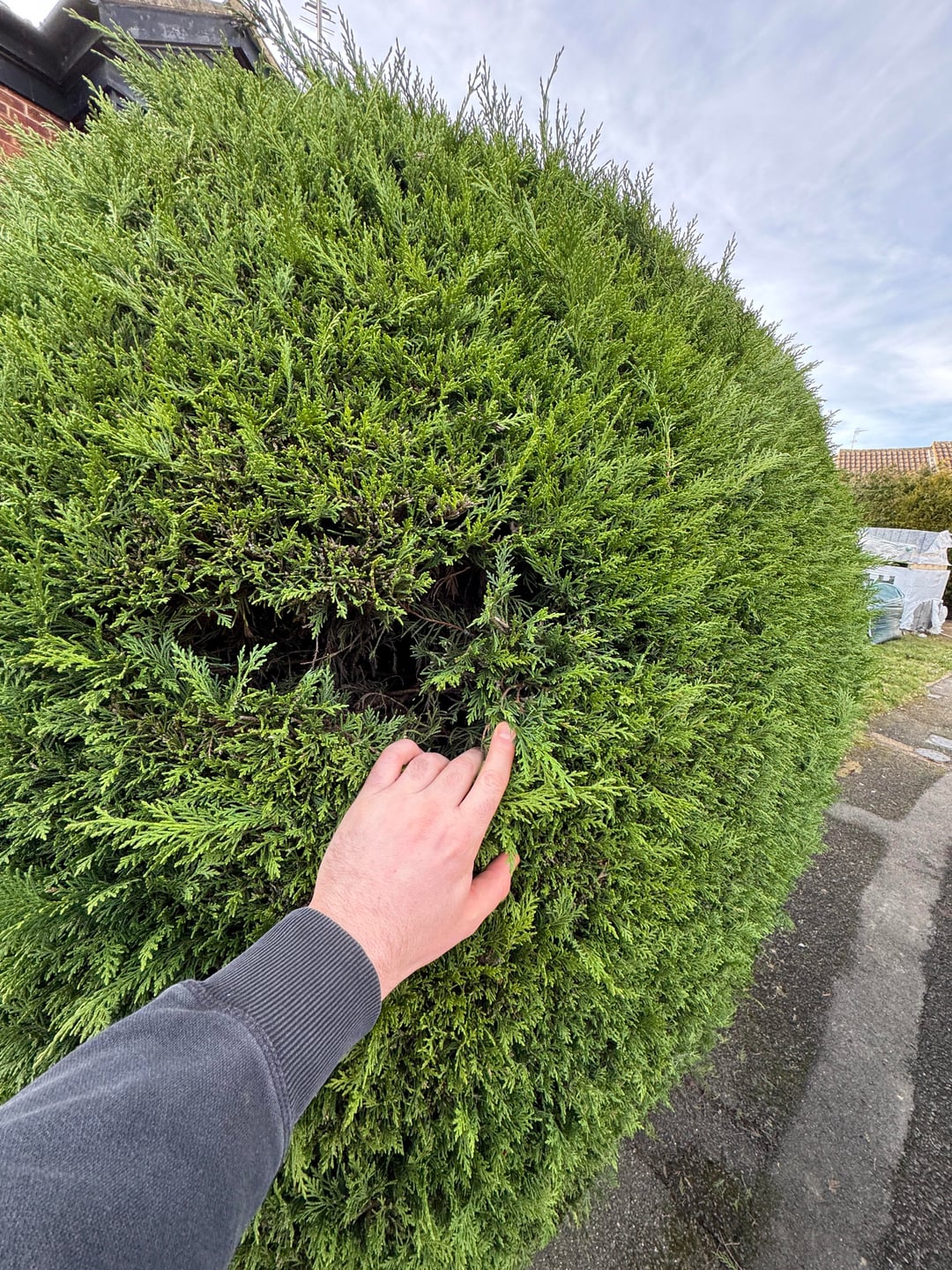
Das Problem ist, dass es schön grün bleibt, wenn ich es nur ein wenig schneide. Dieses Mal muss ich aber gut 10 bis 15 cm seitlich wegnehmen. Wenn ich das Laub trenne, ist darunter viel braunes, abgestorbenes Wachstum zu sehen, und ich mache mir Sorgen, dass ein starkes Zurückschneiden das nur freilegt und dauerhaft einen hässlichen braunen Fleck hinterlässt.
Ich habe Fotos beigefügt, die den Busch zeigen und wie er unter der grünen Oberfläche aussieht.
Gibt es eine Möglichkeit, es richtig zu reduzieren, ohne es zu ruinieren?
Sollte dies schrittweise im Laufe der Zeit erfolgen?
Ist Ausdünnen besser als gerades Zurückschneiden?
Oder ist dies nur einer der Fälle, in denen sich das Grün nicht mehr erholt, wenn man es einmal hinter sich gelassen hat?
Für Ratschläge zum besten Ansatz, zum besten Timing oder zu den besten Tools wären wir sehr dankbar.
Von: Glad_Protection_527
16 Comments
Following because I have a fir in the back yard, and I just don’t believe everyone saying that it’s impossible to reduce their size without them permanently going back to brown growth.
Sorry but I can’t help you. I only came to say I had a good chortle at the photo of you fingering the hole in your bush.
Yeah the nature of these types of trees is that if you go far back enough into the brown wood and lose all green, it will never recover. Sorry. Its either light trim and keep as is or just lose it altogether 😫
I have one of these by front door,it won’t hurt trimming it back hard,might take a while to come back green,but worth it.
This is The problem with leylandii – it will pretty much always have to get gradually bigger because cutting too hard takes them back to brown, which will not regrow. If you have small brown patches you can cut it away and hope the surrounding green will grow in to fill the gap.
I have a massive leylandii hedge that I hate for this reason; we inherited it with brown patches, it’s too big, and we don’t want to go the years without privacy it would take to replace it.
Don’t forget plenty of lube, on the hedge cutters
Mate… You might have to bite the bullet..
They’ve outgrown their spot and you can’t get them back under control.
Don’t know how many you have under there, 3?. cut em down. Grub the stumps out and plant something more in keeping.
You can plant between the stumps as well, that’s what I would do.
You can weave living branches horizontally and they will send off more vertical shoots.
Take the front as far back as the biggest vertical trunk. Remove all the broken down leaves and stuff around the base of the trunk and then weave the longest really green branches from the right horizontal across the front. This should let the growing branches send out vertical shoots and start to fill in.
You may need to tie some off with twine to keep it in place.
Give it a good feed and a bag of compost and then worry about the sides when you see the front coming back.
https://preview.redd.it/v789avgysglg1.png?width=1200&format=png&auto=webp&s=41c3b514b11e2f64d6c0785e58a793b009afcfc1
Had to be said 🙂
🤨
Up you you, but whatever you do to it it will probably end up wooden.
Make sure you disinfect your tools before jumping in to avoid spreading infections.
I think that as well as the pruning issue they don’t look great at all even when maintained. Also, there are so many really awful examples of them around that I wish people would stop growing them
Too big and if cut back properly its going to be a bag of sticks that won’t grow back.
Some wax it all off, others leave a bit for styling, landing strip and the like.
I wouldnt presume to tell you how to handle your bush. -_-
If you’re not going to religiously trim them then they’ll continue getting bigger and, as you fear, you can’t cut them heavily because they stay brown. Go back to stumps and plant something else instead. Preferably something you can neglect for a couple years and then hack back, but it recovers.