
Wir sind vor einem Jahr in unser jetziges Haus eingezogen, und nachdem wir das Innere renoviert haben, wollen wir dieses Jahr den Garten in Angriff nehmen.
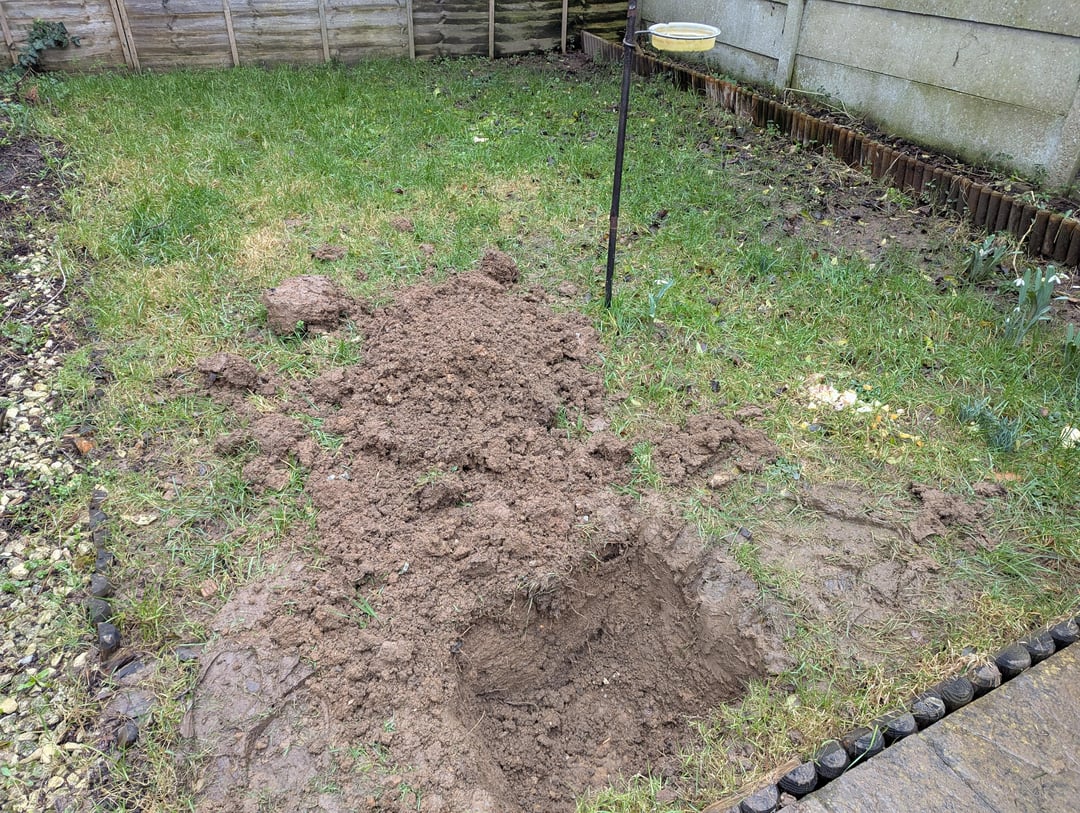
Der Boden hat schon immer Wasser gehalten und ist oft sumpfig und durchnässt. Ich habe beschlossen, ein Loch zu graben, um zu sehen, womit ich es zu tun habe, und es sind gute 40/50 cm Erde und Lehm (glaube ich).
Sie möchten diesen Sommer frischen Rasen verlegen und möchten sicherstellen, dass er gut ankommt und nicht mit den gleichen Problemen endet. Vorschläge und Gedanken willkommen.
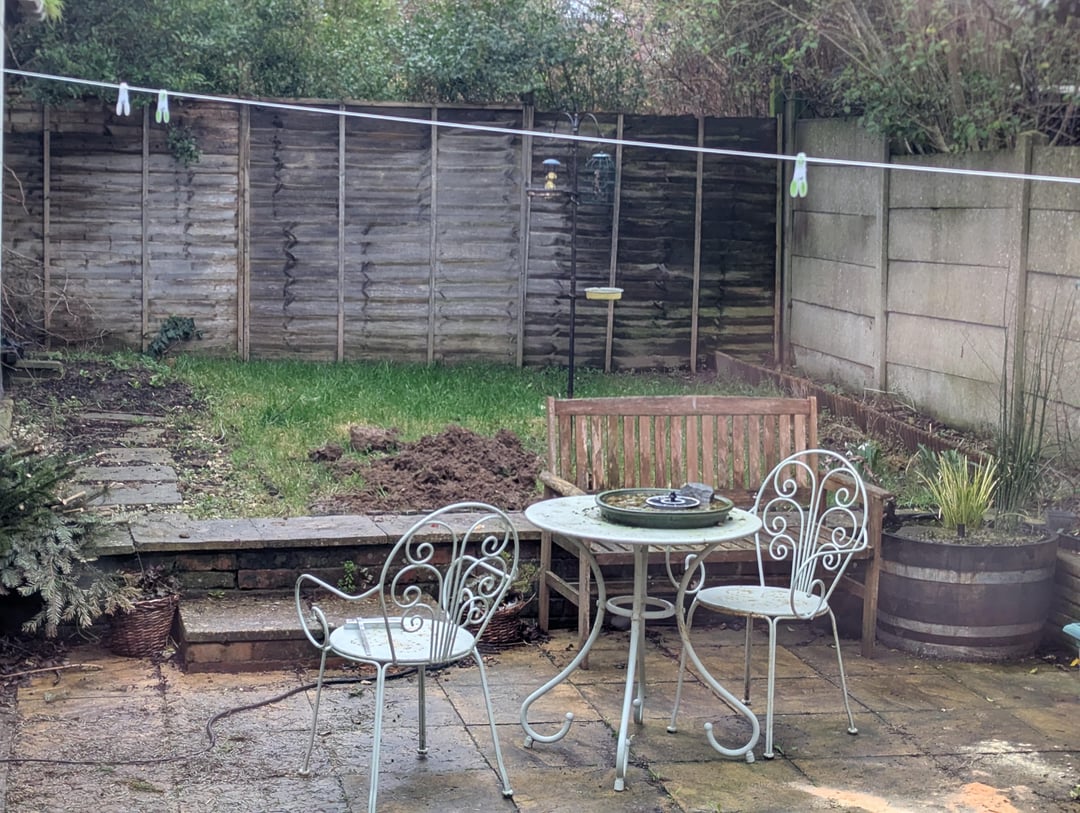
Es ist ein erhöhter Gartenbereich, der die Dinge verändert!
TYIA
Von: Sea_Sandwich7531
4 Comments
It will always hold water as it’s bricked in on the (by the looks of it) lower side, you’d need to add French drains and remove half a brick and add a pipe to allow the water to drain
So, two issues, the slope and the soil particle size distribution. Slope is easy, you need to provide the water somewhere to go otherwise it’ll sit at the lowest point. So either make some holes in the wall backed with terram lined and shingle trench to the surface or pipe it away with landscape pipe with shingle to the surface. To deal with the clay, this is what’s allowing the water to remain on the surface. Beat way to deal with that is sand slots to the surface across the slope to the outlet you make above. That along with spiking and incorporating gypsum (causes clay particles to stick together) and sand will get the water away from the surface.
You can’t tell what type of soil you have through digging a hole. A jamjar test is the simplest method. All you’ve done is compacted it and made it worse.
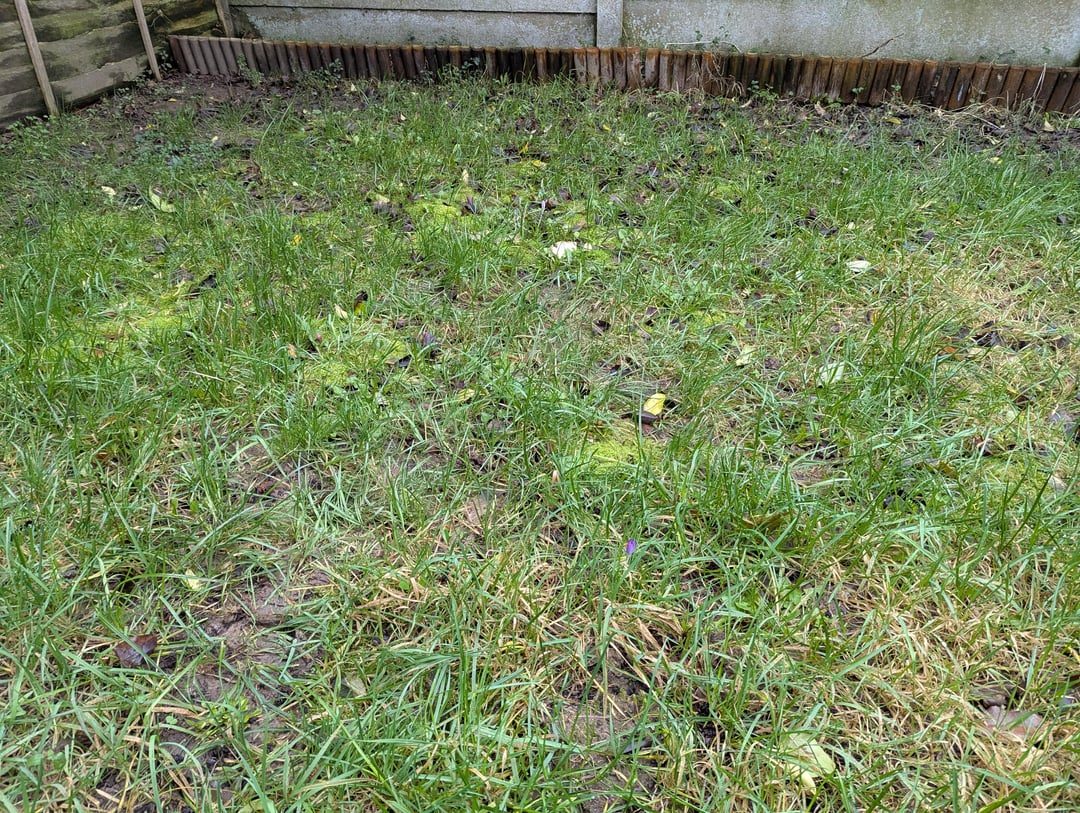
Laying turf is an awful idea; your garden is heavily shaded as there’s moss throughout and high fences. Turf is grown on open fields with full sun and no shade with ideal drainage and will not cope with your garden.
There seems to be a good few errors here that should be sorted first. Why is the logroll buried on the left hand side? Did someone just dump a load of soil there? I can see a fall from left to right.
Does the brickwork for the raised bed have alternating courses or is it just the top two courses that are in line? You could have someone elses mistakes to contend with.
Lawns are increasingly becoming something of the past, they provide very little value to wildlife, and in your case here you would need to fix the drainage or you will always have it sodden like this as you’ve essentially created a pond, there’s nowhere for the water to run. Maybe add stones for drainage, and plants with a good layer of healthy soil and compost, and wood chips.