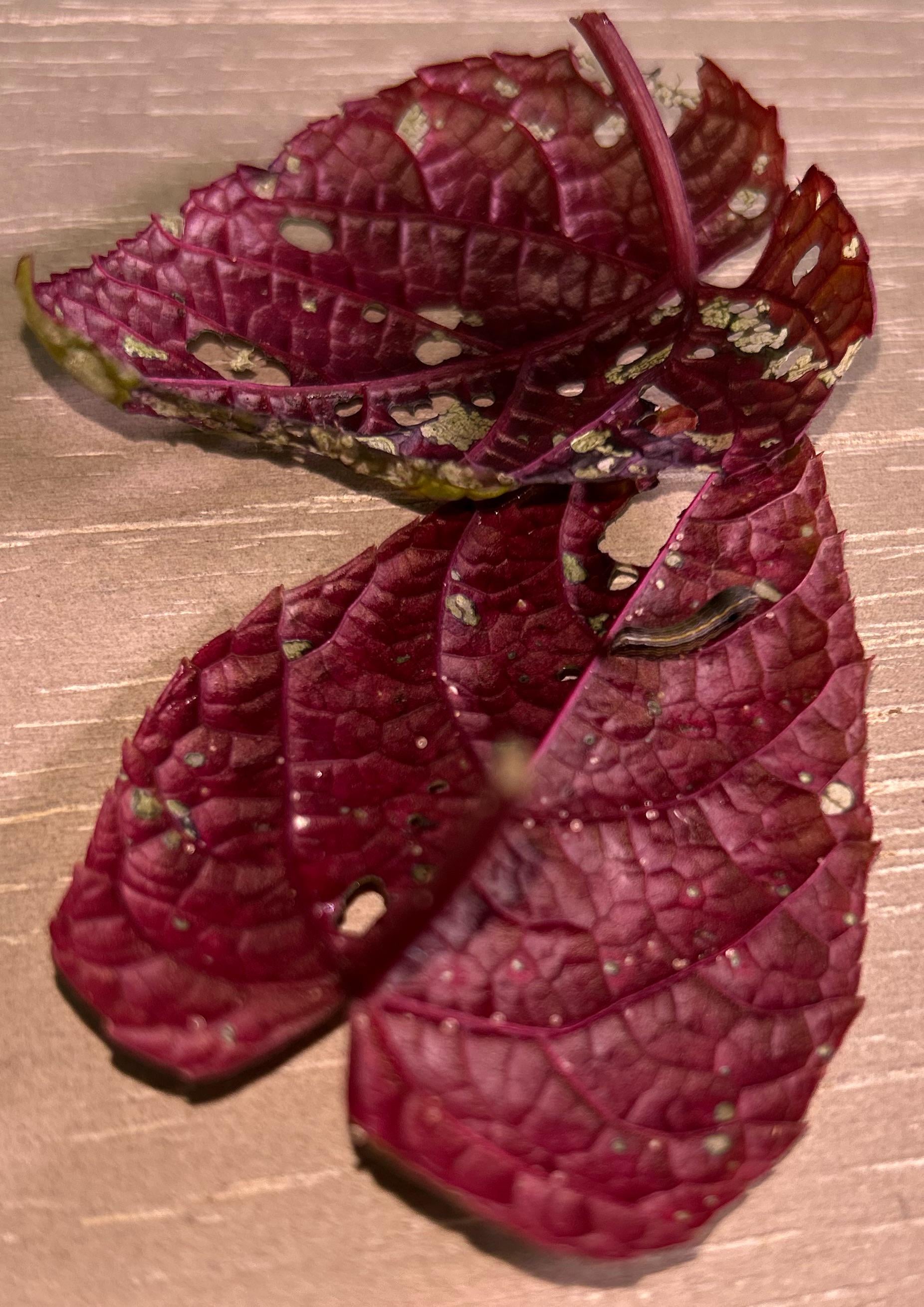
Was sind das für Raupen? Und was sind all diese klaren kleinen Punkte unter den Blättern? Eier? Soll ich mit insektizider Seife sprühen?
Von: Mundane-Travel-868

Was sind das für Raupen? Und was sind all diese klaren kleinen Punkte unter den Blättern? Eier? Soll ich mit insektizider Seife sprühen?
Von: Mundane-Travel-868
3 Comments
Okay so first off, those are absolutely not caterpillars. People always jump to “oh no bugs are eating my plant,” but what you’re seeing there is actually a classic case of thermo-osmotic leaf delamination, which is when the pigments inside the leaf try to escape due to high emotional stress in the plant. The long noodle-looking thing isn’t a caterpillar at all (it’s what’s known as a vascular pigment worm, which isn’t even alive). It’s just the leaf’s central vein curling up into a defensive posture. Plants do that when they feel watched.
Now, the clear little dots on the underside? Those are definitely not eggs. They’re micro-hydrostatic pressure beads. Basically, when a plant gets too confident in its own hydration cycle, it pushes excess water through the stomata and forms those perfect little spheres. Gardeners call them “leaf pearls.” They’re totally normal and a sign that the plant is entering the pre-reproductive phase where it tries to mimic insect behavior to confuse predators. So ironically, if anything, the plant itself is the one impersonating bugs here. Trippy, I know LOL.
As for the holes: those aren’t bite marks. That pattern is way too symmetrical. Those are photosynthetic blowouts (when a leaf absorbs too much moonlight and the chlorophyll overheats) it pops tiny holes for ventilation. Happens a lot this time of year depending on humidity.
You definitely shouldn’t use insecticidal soap. It would actually make the situation worse by stripping the leaf of its mimicry oils, causing the pigment worms to uncurl and fall off, which stresses the plant. If anything, you should lightly mist the leaves with room-temperature black coffee (not decaf….that’s important….the plant needs the caffeine to regulate its territorial instincts). Do that twice a week and the leaf pearls will reabsorb back into the tissue once the plant feels safe again.
Totally fixable. Honestly, fantastic plant health overall. If anything, it’s showing above-average humidity resiliance.
Yes caterpillar. Spray the plant with BT if you can
Well, what do you think it lives off? air?