
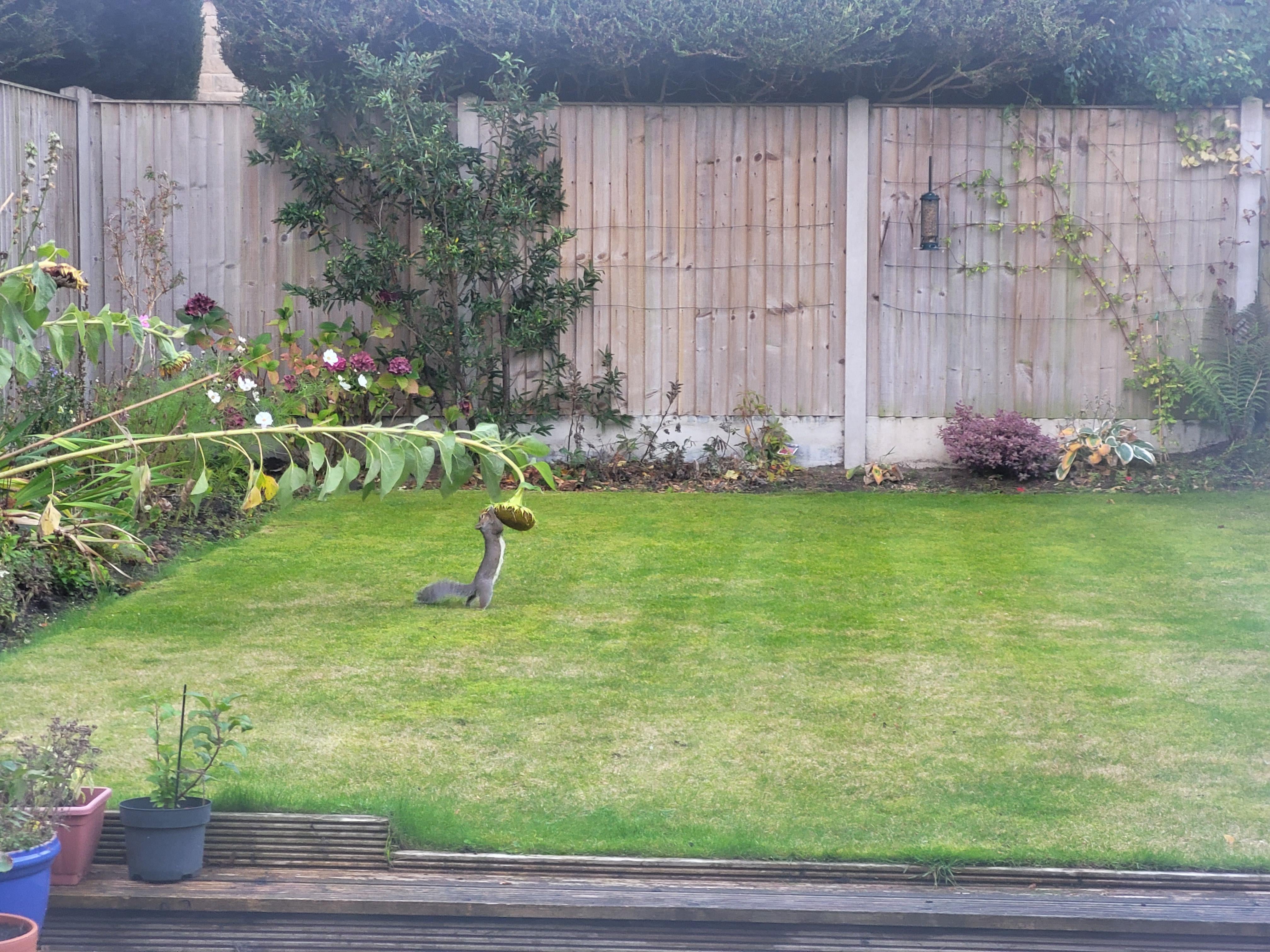
Wir haben einen sehr feinen Boden, der zwar toll klingt, aber einfach kein Wasser aufnimmt. Selbst nach biblischen Regengüssen trocknet es innerhalb eines Tages aus. Ich habe etwas Kompost darauf geworfen und eingegraben, aber es hat keinen Unterschied gemacht.
Ich habe keinen Platz für einen Kompostbehälter. Was kann ich meinem Gemüsebeet und um Blumen herum hinzufügen? Ich habe gerade rote Zwiebeln gepflanzt, daher denke ich, dass der Dünger zu viel für sie sein wird. Alle Ideen willkommen! (Foto hauptsächlich, weil ich es liebe, wie der kleine Kerl seine Samen bekommt).
Von: Wibblesquirrel
25 Comments
Sorry no advice, just wanted to say amazing photo that, almost a contender for the country file calendar!
* Add more organic matter (compost, manure etc)
* Mulch heavily (bark, compost, manure, etc)
* Plant plants for the right space
* Potentially make some raised beds if those don’t remedy the issue?
At the end of the day, more compost is your only answer to add body to the soil. Mulching with coir or tree bark will help somewhat with water retention and will add humus over time too. If I could swap you 50/50 for my Herefordshire clay I would.
Mulching in spring is best, you’re helping to preserve moisture over the winter months, 3-4 inches is what i put down (aim to have it all done by end of March) and makes a big difference, digging it in might help improve soil structure but wont retain anything.
if you haven’t got room to make compost then buying in is the only option, avoid anything too fine as it’ll just break down quickly.
As for onions, no need to mulch unlike most veg I’ve always found they sort of thrive on neglet…..
Keep mulching with compost every year and eventually it will improve. Mine’s the same and it is a pain to have to keep watering vegetables and annuals but in some ways its a big advantage, especially with the way our climate is turning.
– Root systems, so plant plants! In the way that forests help to dissipate huge volumes of water.
– Letting an area of that lovely lawn go wild could help!
– Healthy soil, so adding organic matter such as wood chips, food dug into trenches, grass clippings to your beds.
– Ensuring that you limit the amount of bare soil, with mulch or cover cropping (field beans are great)
– I’d also encourage you to rethink the compost bin, plenty of space in that pic and it’s free soil for your lovely garden!
The soil in my garden is basically sand. Compost every year. Not the dry potting compost that you get from the garden centre but home made with lots of plant matter. Manure is good. It’s a multi year story. Another alternative is to dig out the soil and put some top soil in.
What’s your soil like? If it’s heavy clay then it’s feast or famine. Conversely, if it’s basically sand with some mud it’ll be feast or famine too.
I have a similar problem and after endless bags of compost, over several years, tried farmyard manure this summerm in desperation, having avoided it because of potential odours!
It did make a difference and I’ll use more next year and odour wasn’t a problem. I used Clover Farmyard manure – but no doubt others are as effective.
I had tried horse manure about 10 years ago (I was offered it free), but it did smell strongly and I had lots of weeds from grass seeds – no doubt both problems were due to it being too fresh. Whereas when you buy it in bags it has been well composted.
One caveat is that manure doesn’t suit certain plants so you need to check – and dig it in well
I had also tried horticultural vermiculite in flower beds this summer (before the manure) as it helps retain water. It didn’t really help me, but maybe because I didn’t use enough, as it is very expensive to use over a large area. However, it may well work well when in a more concentrated area of a flower/veg bed, and raised beds in particular. So that would be OK for onions
Great photo by the way!
Coconut core is a good option that comes in dry blocks or pellets just add water.
Give the area a good spike with a garden fork then rake in the core or compost.
I absolutely love that picture.
Have a look at Rocket Gro. They make and deliver really good composts and mulch, yoi can then just lug a box through to the garden and then open it in situ.
That’s bait. Great shot btw
Thought it was a snake!
Don’t pick up your lawn clippings, check to see if your lawnmower has a bung or other mulch option. As everyone else has said only organic matter can hold moisture. so don’t cut too short, I have mine set on 30 or 40mm, that way the grass is always green. Finally always cut last thing at night, never in sunlight.
More organic matter and making sure there is a healthy soil ecosystem is the way. No herbicides/pesticides. Maybe some amendments with mycorrhizal fungi/beneficial bacteria (they will aggregate the soil in a way that it becomes more sponge like and retains water better)
Whatever the answer is I need to know so I can do the opposite. Waterlogged mud bath at present.
Don’t cut the grass as short.
Edge the lawn all the way around
Hollow core aeration and top dress with compost.
You could hire an aerator which punches deep hollow holes about 9-12” deep which allows water to get deeper into the soil. Topdress that with some compost so the holes fill with organic matter.
Leaf mould, ie rotted down leaves, is also good and I would count squirrel poo as organic matter as well!
My garden is full of clay soil. If you come up with a wheelbarrow we can swap one barrow of your soil for one of mine.
After a few hundred trips we may both have perfect soil😂
Squirrel blood helps…
Looked like a furry cobra when I first saw it
Chat up a greens keeper. From what I remember of the job They spend alot of energy making sure the greens don’t retain water. Might get some tips on what to to from the other end of the scale.
Great photo
Add clay. It’s like a sponge.