
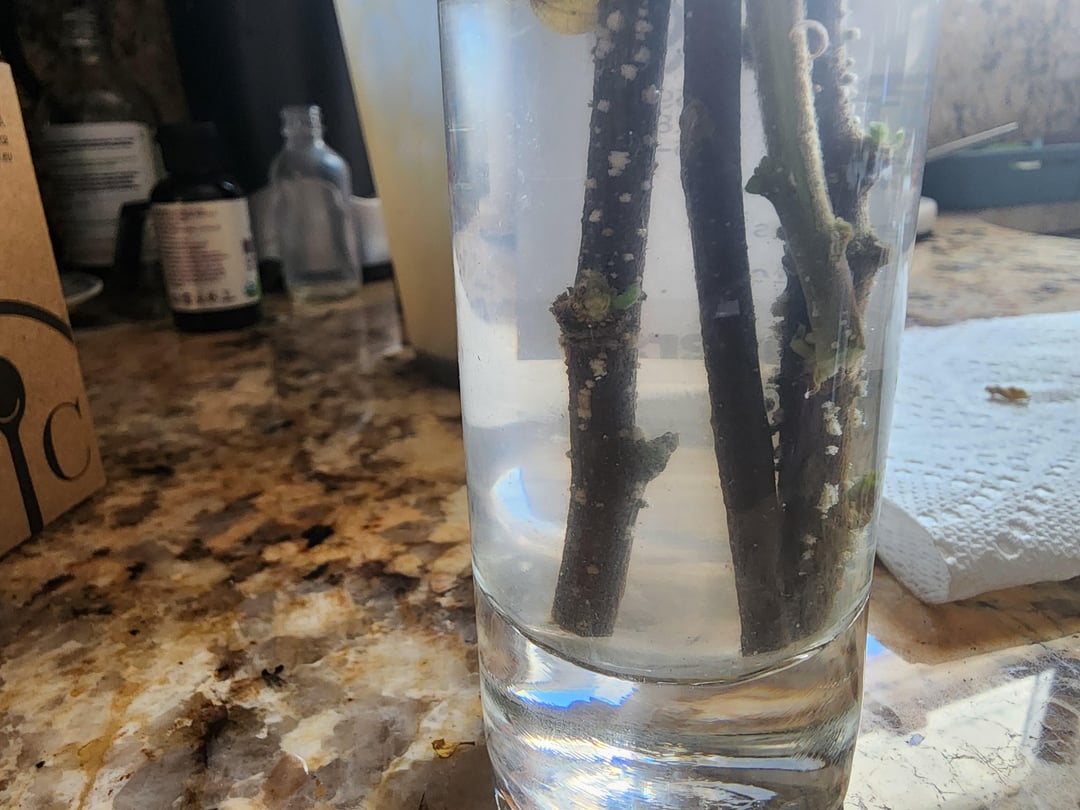
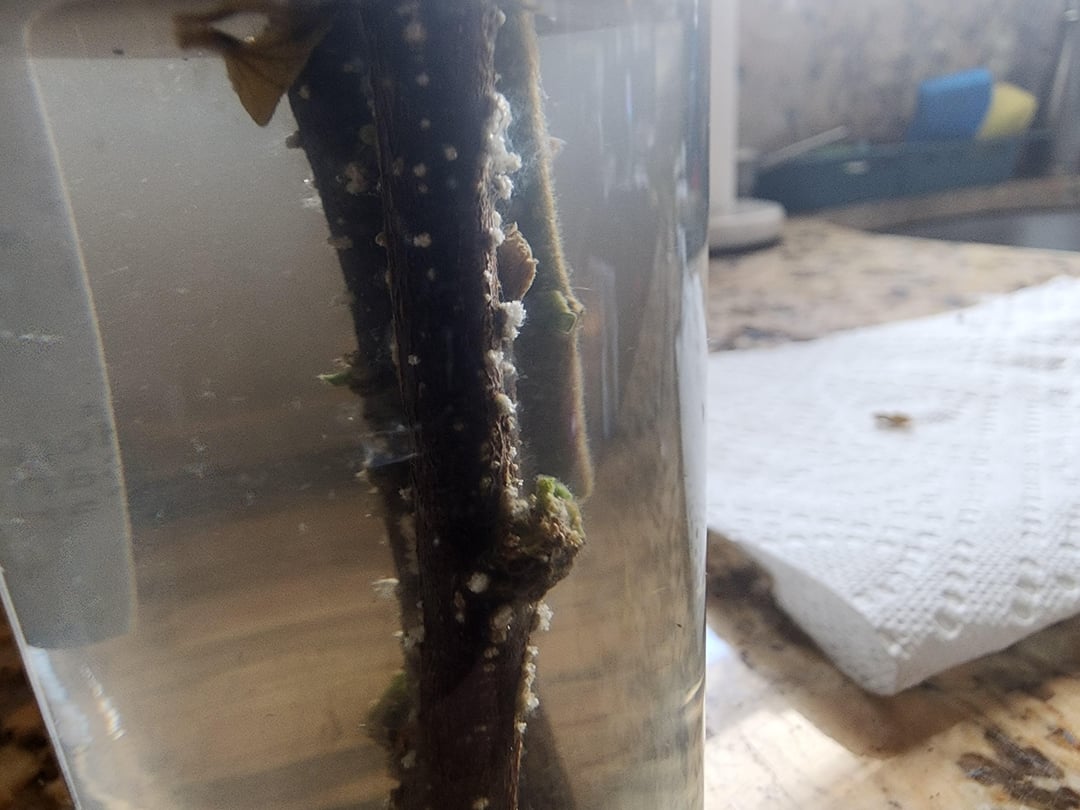
Ich habe diese Stecklinge vor ungefähr anderthalb Wochen genommen. Ich beschloss, das Wasser zu wechseln und die Stängel heute auszuspülen, weil sie ein wenig bewölkt aussahen, und bemerkte diese weißen Teile. Sind diese für ROS -Stecklinge normal oder sollte ich sie trennen?
Von: CaffienatedTactician
4 Comments
Those are root nodes – congratulations! Your cuttings will soon be ready to plant!
my first thought was fungus…
https://preview.redd.it/jigtrzu1nnef1.jpeg?width=3024&format=pjpg&auto=webp&s=106f7baa66b4b58470e605d50f2e2a63a5af8762
I have these too and was so concerned. Turns out… we’re doing it right!
Ok, this is such a cool phenomenon! [Science is still working on totally figuring it out](https://pmc.ncbi.nlm.nih.gov/articles/PMC144206/pdf/110751.pdf).
So one way to look at it is as a root precursor – the plant is active and as cells are growing, sometimes a calcium-rich cutting will exude naturally occurring calcium oxalate crystals.
Interestingly, it’s pretty easy for plants to get extra calcium.
The crystals aren’t bad, and there isn’t anything specific you could have done to prevent the crystals. It will still propagate like normal. 👍
From the article “[Cell-Mediated Crystallization of Calcium Oxalate in Plants](https://pmc.ncbi.nlm.nih.gov/articles/PMC144206/pdf/110751.pdf)”:
“Although the mechanisms controlling calcium absorption at the root are controversial, plants **accumulate calcium in excess of cytosolic requirements** and limits (Loneragan and Snowball, 1969; Clarkson, 1984; Kirkby and Pilbeam, 1984; Kinzel, 1989).
Many plants accumulate crystalline calcium oxalate in response to surplus calcium (Frank, 1972; Zindler-Frank, 1975, 1991, 1995; Franceschi and Horner, 1979; Borchert, 1985, 1986; Franceschi, 1989; Fink, 1991). With a solubility product of 1.3 × 10⁻⁹ in water, calcium oxalate provides a relatively insoluble, metabolically inactive salt for calcium sequestration (Kinzel, 1989). Calcium oxalate thus provides a high-capacity repository for calcium, and **plants may accumulate this salt in substantial amounts**, up to 80% of their dry weight (Zindler-Frank, 1976).”