
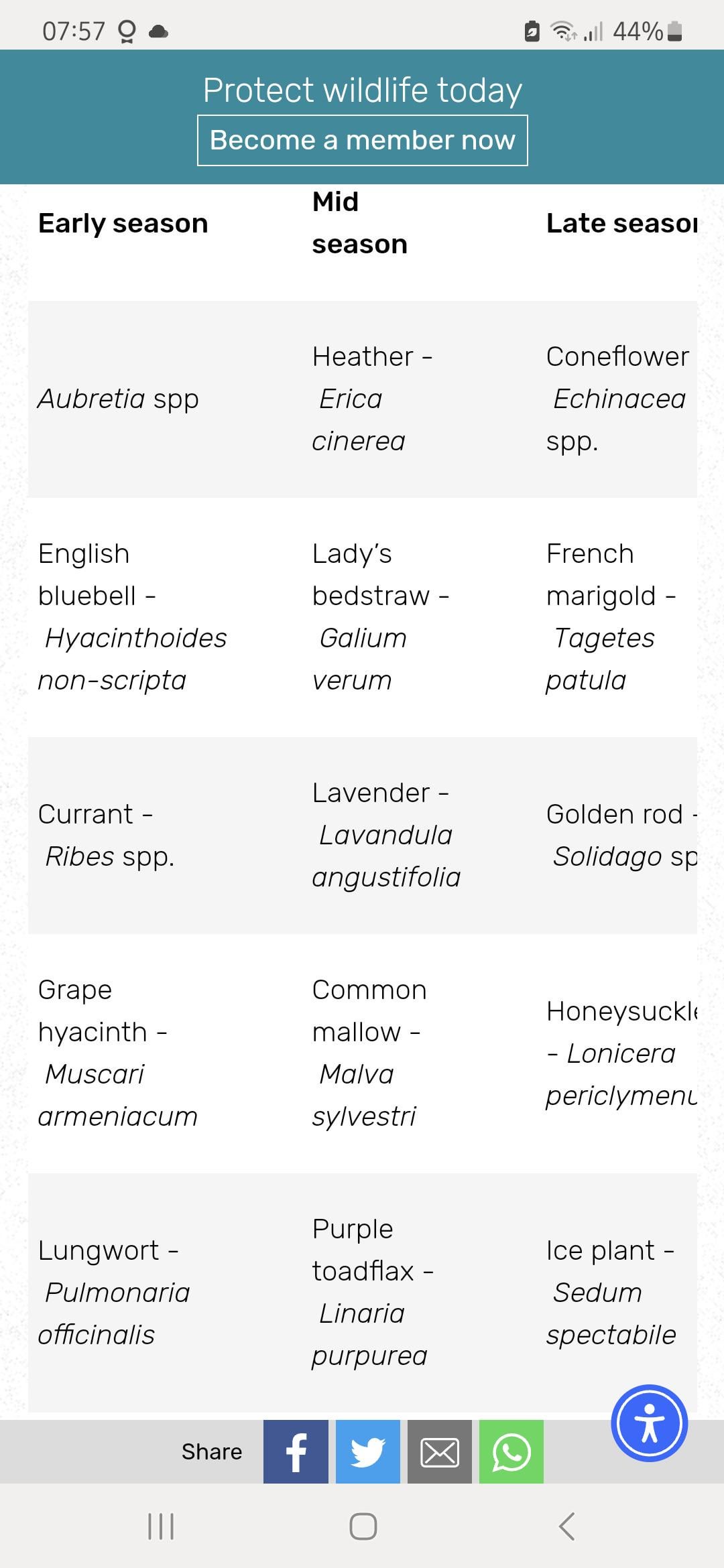
Noob Frage, sorry. Ich mag die Idee, die ganze Saison über Bienen zu pflanzen, wie vorgeschlagen. Wenn das Zeug in der frühen Saison jedoch ausgeht, haben Sie große Lücken oder bleiben sie bis Winter, aber nur mit Blättern und ohne Blumen? Ich plane einen neuen Bereich und möchte nicht wirklich viele Lücken.
Von: GaryGorilla1974
5 Comments
We have bee hives, and obviously it is the leaner months you are more concerned with (Spring & Autumn). During the winter, we feed our bees nectar cakes.
For early Spring, they will feed on snowdrops, daffodils, crocus, blue bells, tree pollen, hellabores, Heather, winter aconites etc. In Autumn they like late flowering geranium, and ivy flowers, some heathers, gorse.
Your list is good. You will notice a lot of the plants I have mentioned grow wild. Wild things are always best, and they are reliable. Bees harvest over a 3 mile radius from their hive.
It depends whether the plant is evergreen or not. Lavender, and heather, for example, will stay green after the flowers have gone, but bluebells won’t. If you don’t want gaps then look up “evergreen plants for bees” or something similar.
https://www.rhs.org.uk/garden-design/sustainable-planting-combinations/foliage/evergreens-for-pollinators
We’re very pollinator aware, so our garden is planted for as-close-to year round flowering as possible. It’s not all native, admittedly.
Early flowers (Feb through to May) – Pulmonaria is the earliest in my garden, flowering around the end of Feb, followed by the usual bulbs, fritillaries and primrose/cowslips. My rosemary and goosberry bushes flowered for the first time this year so will class those in early as flowers were out a few weeks ago.
Mid (mid-April through to July) – fruit trees and summer fruiting bushes, foxgloves, aquilegia, lupins, roses, chamomile, sage, oregano, thyme, nigella, marigolds, nasturtium, wisteria.
Late (July through to October/November in a warm year) – lavender, echinacea, cornflower, dahlia, sunflowers, veg like beans/courgette/pumpkins/peas, snapdragons, buddleia (deadhead after flowering so it doesn’t spread), roses again, everlasting pea, passion flower, honeysuckle, star jasmine.
Not exhaustive but what I can remember from looking out at the garden. I do a lot from seed so I can set a few off a bit later for continual flowering from annuals. There’s a bit of overlap but by November everything is done, and it depends on the weather in late winter as to how early and what order everything appears.
Your list looks pretty good but I’d want a lot more variety for max coverage.
Lady’s Bedstraw can get a little messy so you’ll need to contain it within some decorative metalwork or the like. It dies off in the winter. I personally love it as you can dye pre-treated textiles with it! Depending on which part of the plant you can get vibrant yellows, reds and oranges. It’s also lovely to cut and hang around in the house as a natural air freshener.
French Marigold is a great all-round skin healer. You’d need to learn how to make creams and salves with it but it’s not a complicated business. You can also dye pre-treated materials with it for glorious oranges.
EDIT: added some stuff about Marigold and clarified material needs to be pre-treated to achieve dyeing results. Also, if anyone wants to hit me up about dyeing and natural medicine gimme a shout!
Bees love my oregano