
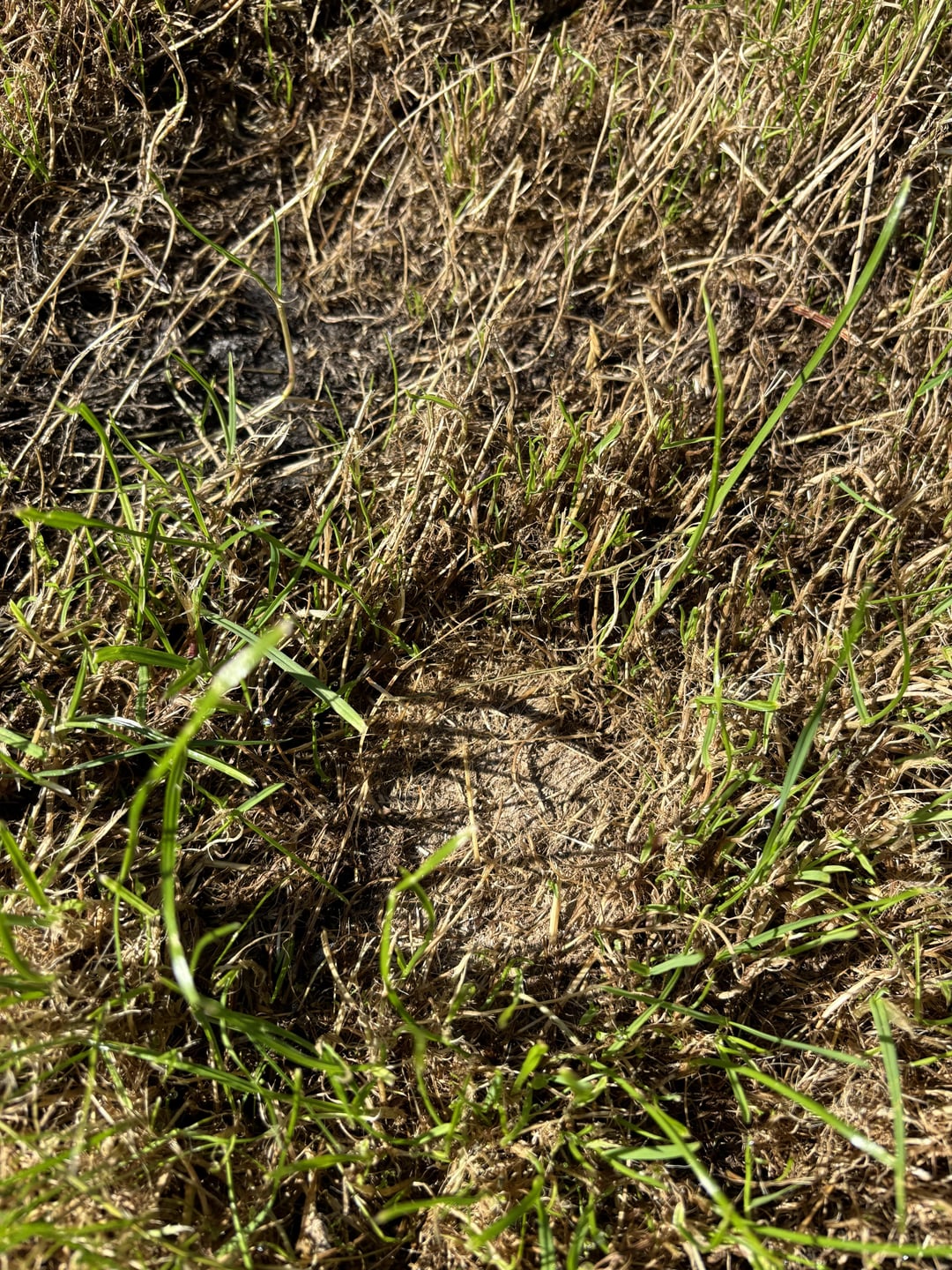
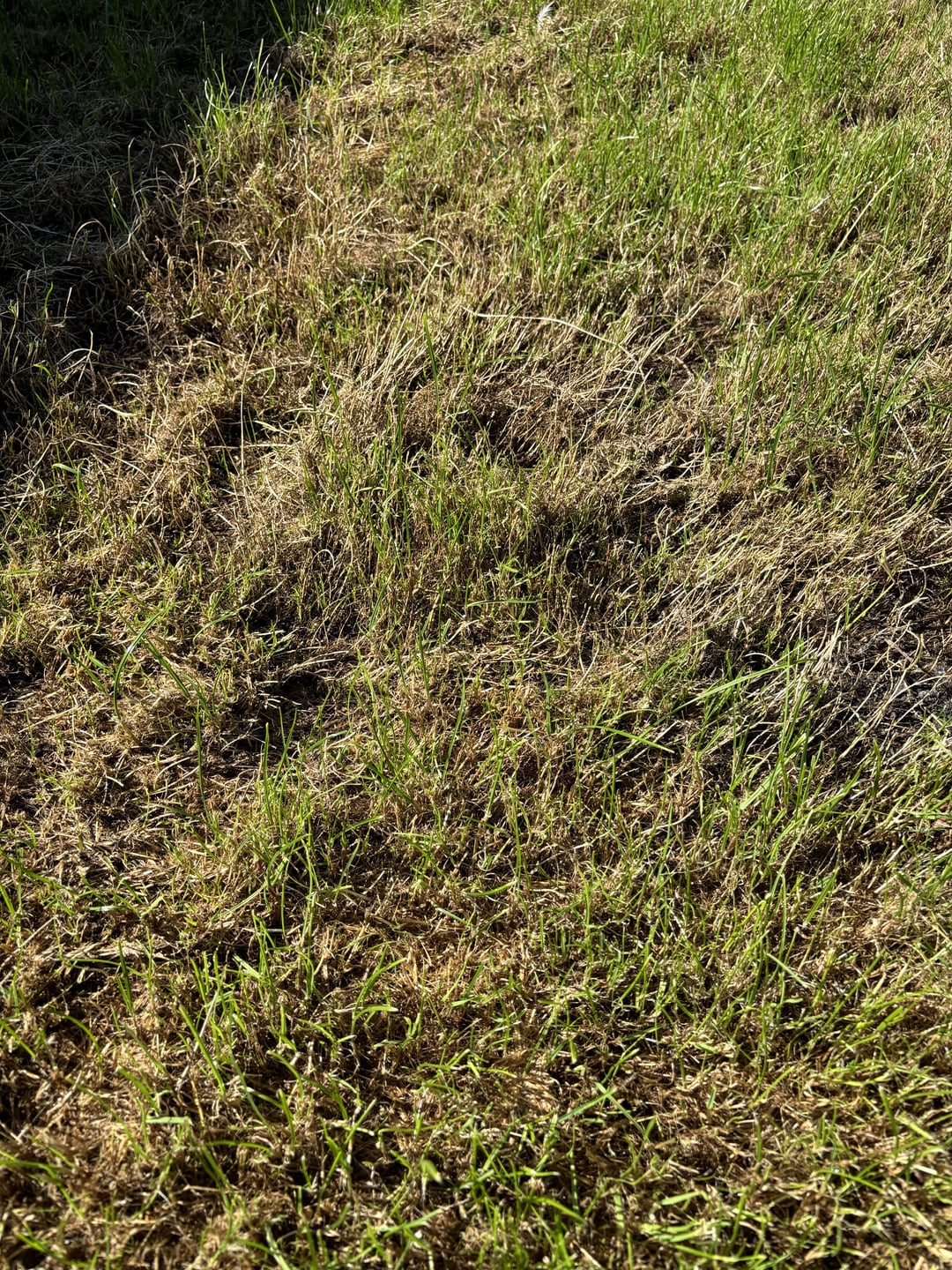
Ich könnte wirklich einen Rat zu meiner Rasensituation gebrauchen. Ich habe meinen Rasen im April verlegt und war mir nicht sicher, wann ich ihn mähen sollte, ohne den Rasen zu beschädigen/das Gras zu belasten. Der Boden war voller Dünger und er wächst sehr schnell. Leider habe ich ihn zu lange liegen lassen und er ist so überwuchert, dass das Mähen extrem schwierig war. Ich habe versucht, die oberste Schicht abzuschneiden, aber bei dem sehr nassen Sommer, den wir hier in Großbritannien hatten, fiel der Grasschnitt darunter und erstickte schließlich das Gras.
Nachdem ich nun endlich jemanden habe, der den Rasen richtig mäht, habe ich überall tote Stellen entdeckt, und das Gras wächst nur noch sehr fleckig nach. Es erinnert mich an einen Horrorfilm aus den 1920er Jahren, der auf einem Friedhof spielt!
Da ich noch recht neu in der Gartenarbeit bin, wäre ich sehr dankbar für detaillierte Anweisungen, wie ich meinen Rasen wieder zum Leben erwecken kann. Was muss ich tun, um diese toten Stellen zu beseitigen und sicherzustellen, dass das Gras gleichmäßig und gesund nachwächst? Ich wäre für alle Tipps und Ratschläge sehr dankbar.
Vielen Dank im Voraus für Ihre Hilfe!
Von: jaivicks
9 Comments
Scarify, aerate, reseed, top dress
I’ll try to give the simplest solution. You’re going to get a lot of advice that will over egg the situation.
First, fixing a lawn is a process. There’s no way to do some single activity and fix things. So you will be doing work now that will show improvement in spring and summer next year.
Good news, this will be fixed with simple tools and easy maintenance tasks
Get your mower sharpened. Either learn yourself if pay for a service. Blunt blades bash the grass and strip it, leaving long dead brown fibrous leaves that will rot and die creating thatch and dead patches.
Get a good metal spring rake. Rake the lawn BEFORE you cut it. This will remove some thatch and will pull grass upright and give you a more even and better quality cut. It also stops tangled lateral growth.
Give it a really good, like really really thorough raking. Do this now and do it a few times in the year. This should be a particular job that is done very very thoroughly in autumn. This removes dead material and thatch. Thatch causes the leaf to grow from the top of the thatch instead of from ground level. You can end up scalping out the growth base or with blunt blades actually just pull tufts out by the roots. Creating more bald spots and thatch.
Consider buying a £40 electric rake/scarifier to make it less manual labour.
Cut it often and little. Basically 90% of all lawn problems are improved with regular cutting. Don’t scalp the lawn or cut too low. It’s not a bowling green and will never look like a bowling green. Bowling green have a full time employee working in them every day of the week. This is unfeasible for a domestic lawn. Cutting will encourage more healthy growth and spread, helping to fill the gaps. Make sure blades are sharp.
After raking or scarifying in autumn put down some seed. Scatter thinly, don’t over seed.
Maintain this schedule going forward.
Next year think about applying a weed and feed. Or preferably just care less about small of insignificant weeds. As long as it’s green it looks fine. But maybe you want a nice neat grass only lawn. Just follow product instructions, but maybe use it half as often as the product suggests, or less so.
Come back next year for more advice.
You need to give it time to recover from being overgrown. Just mow regularly, and this will fix itself eventually.
Keep cutting regularly and water regularly too, sometimes we think that if it has rained then we don’t need to but this is not true. Also you say it has been fertilised but with what? Most synthetic fertilisers are washed out fairly quickly and are often only effective for growing plants- your soil is what requires to be fed so it becomes a suitable growing area. I recommend that you use granulated seaweed as it is an excellent soil improver that helps to build up a good humus which in turn helps to create a good environment for all of your soil builders- think worms, micro organisms etc. when a plant has a problem it is usually always its growing medium that is insufficient. Healthy soil grows healthy plants which can also make them resilient to other external problems like aphid attack/ disease.
Give it a good rake and then mow it as regularly you can given the rain. It will sort itself out.
Just leave it, it will sort itself out
Controversially, traditionally managed, ‘perfect’ lawns are high maintenance deserts. If you really want it to become a valuable contribution to your living garden, you have a perfect opportunity. All those bare patches are just ripe to support incoming weed seeds – AKA native pollinator food sources.
Plants such as Self heal, Bird’s-foot-trefoil, Hawkbit and Fox-and-cubs, all take being regularly mown and provide flower throughout the summer. Your lawn will become a valuable addition to local pollinator habitat.
Rake the lawn before doing anything, as described in other responses. Cut it, but not too tight – a couple of inches would be my preference. You can plant plugs of these species from specialist suppliers and purchase seed – alternatively, collect seed from a friend’s garden. The world is your oyster…
Rake out all the dead grass cut very short, as short as your lawn mower will go and over seed. I would over seed and add some topsoil with seed to the patches. Keep it wet with a sprinkler, I would do this for 1 hour ever evening and cut every 2 to 3 weeks. Once the seed is estaished cut every week especially during the summer. In autumn add a feed/weed killer treatment to keep it looking good.
**BLUE PILL**
Don’t try to solve the problem, eliminate it. You are realizing that there is no magic wand to wave that will give you a verdant patch that will be your sunlit upland. It’s hard, it takes a LOT of work, a lot of time, money, chemicals, weedkillers, fertilizers, scarifying etc. etc. even them the results for the vast majority are mediocre
or
**RED PILL**
Watch this video and make your neighbours jealous the easy way. No more mowing.
Video is US related but same for the UK
WATCH THE VIDEO
[https://www.youtube.com/watch?v=bR5kIPwg6_Q&t=8s](https://www.youtube.com/watch?v=bR5kIPwg6_Q&t=8s)
r/NoLawns