
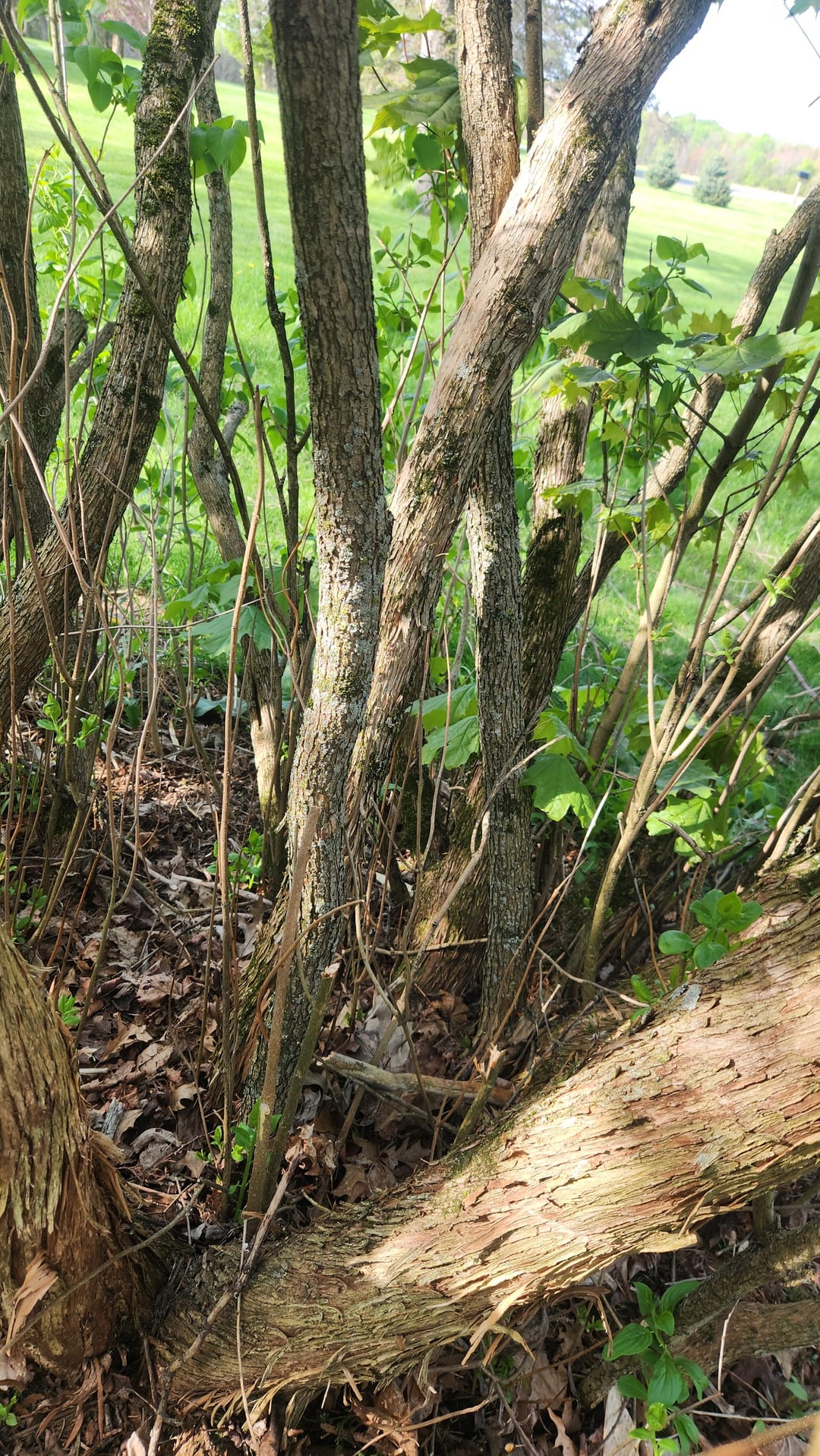
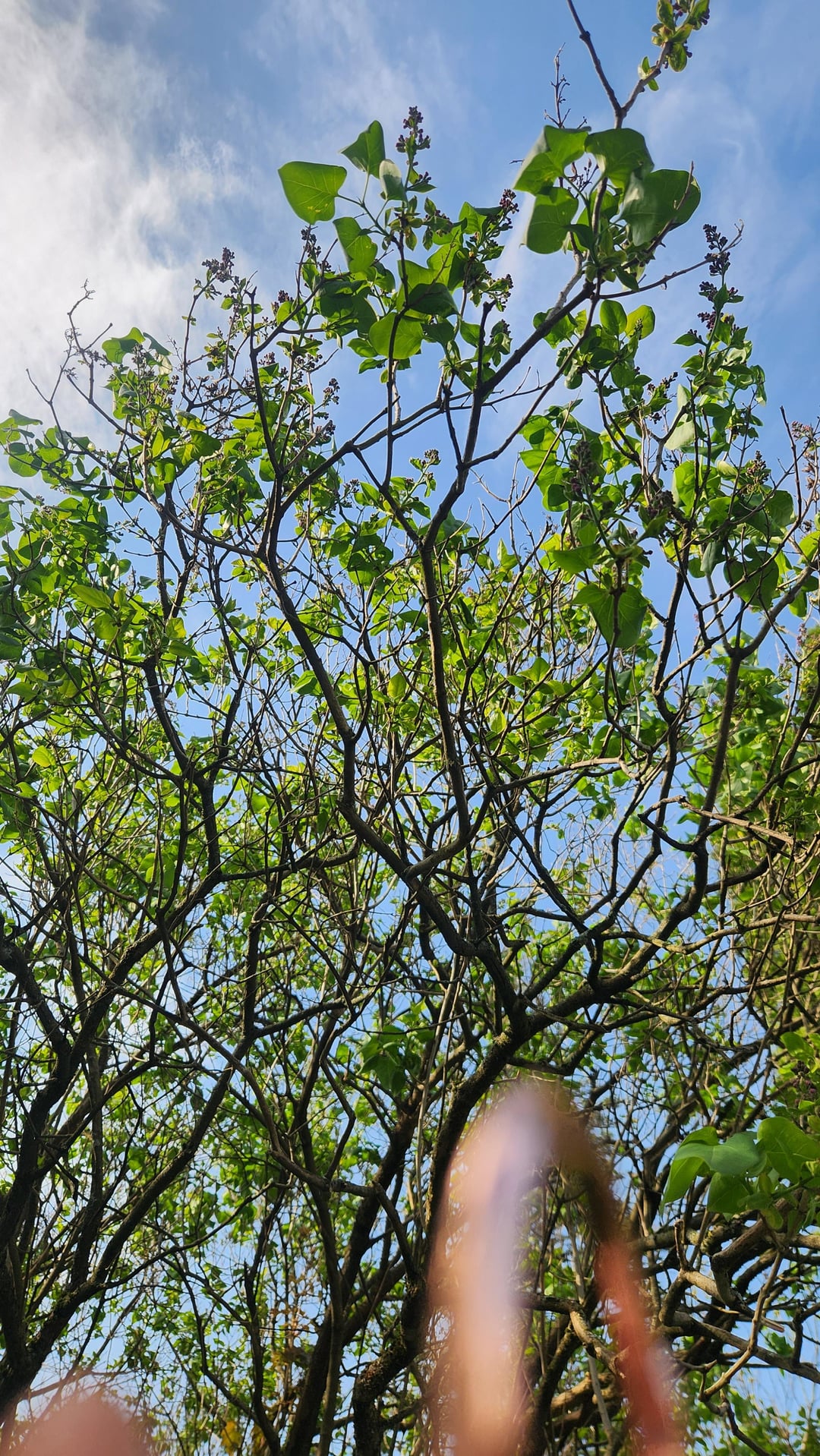
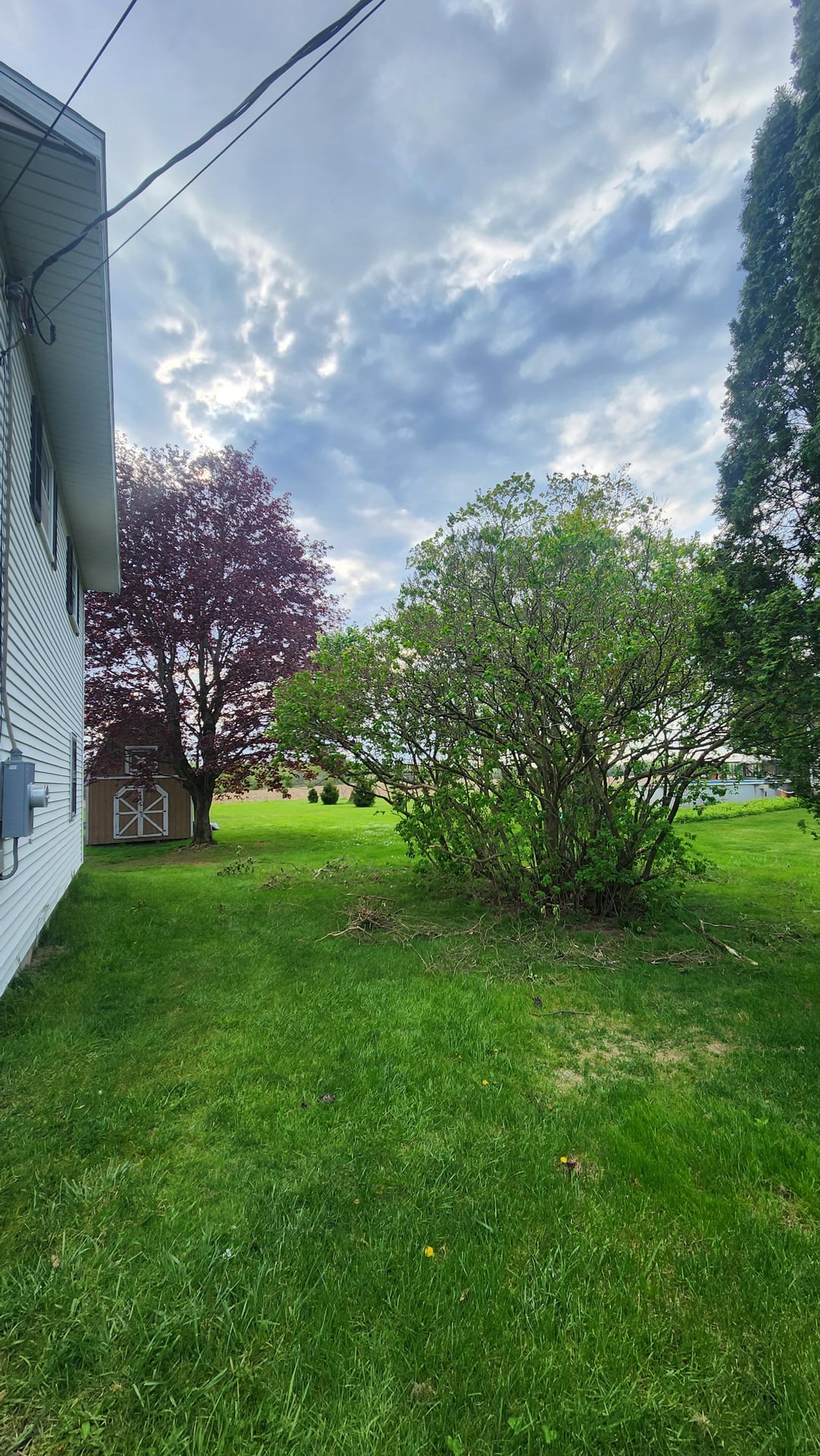
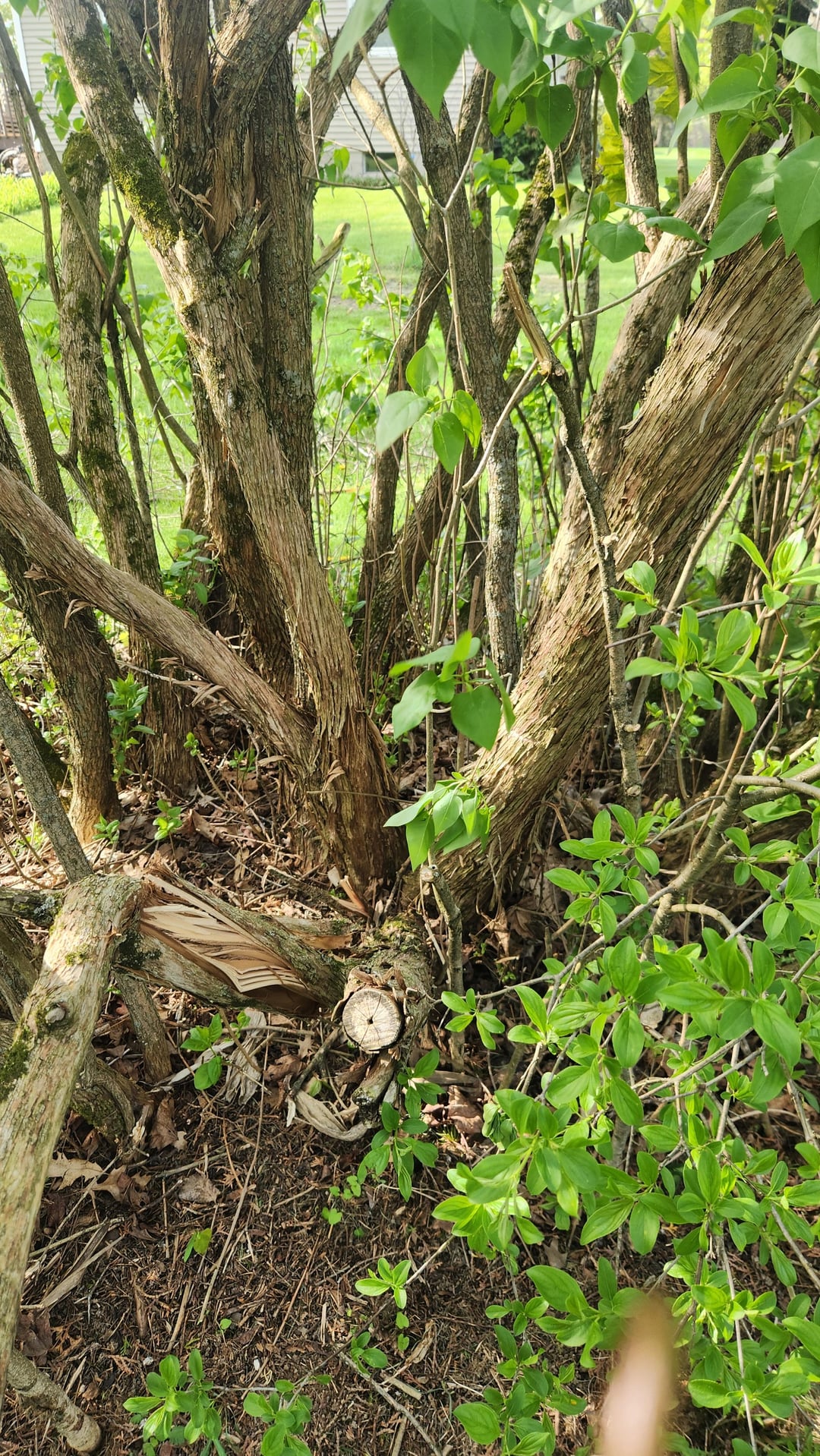
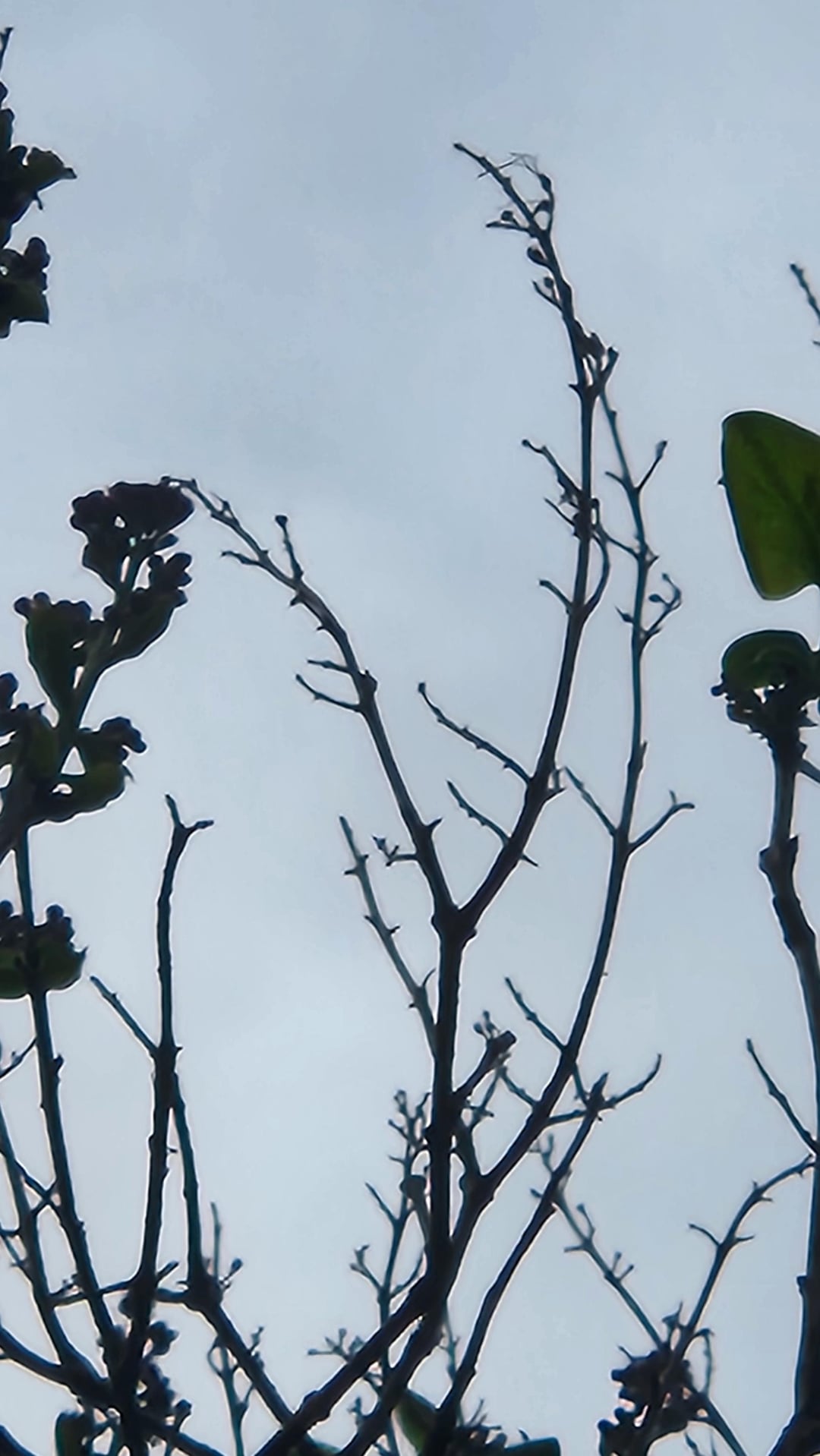
Wir sind letztes Jahr eingezogen und kümmern uns gerade erst um die Gartenpflege. Wir haben es mit einem riesigen, überwucherten Fliederdickicht zu tun, von dem ich annehme, dass es an den gekräuselten und verdrehten Zweigspitzen Krautfäule hat. Ich habe getan, was ich von Hand erreichen und beschneiden kann, aber der Umfang ist überwältigend und ich weiß nicht, wo ich eigentlich anfangen soll.
Ein paar erschwerende Faktoren: – Es gibt eine große Lücke in der Mitte, was darauf hindeutet, dass es sich möglicherweise um zwei separate Pflanzen handelt. – Im Dickicht wachsen zwei kräftige junge Ahornbäume, die wir erhalten und umsiedeln möchten. – Viele Knospen sind zum Blühen bereit, aber andere sehen krank aus. – Die erkrankten braunen Knospen befinden sich meist oben, außerhalb meiner Reichweite
**Meine Hauptfragen:** 1. Wie erkenne ich, welche Zweige tatsächlich beeinträchtigt und welche nicht nur unproduktiv sind? 2. Sollte ich alle Äste ohne Blätter/Knospen beschneiden oder weiter nach unten gehen und die großen Stämme absägen, wenn die meisten Äste in diesem Abschnitt absterben/tot sind? 3. Sind wellige oder seltsam geformte Äste ein Zeichen einer Infektion oder einfach nur neues Wachstum? 4. Wie kann ich das am besten angehen? Sollte ich es ganz entfernen, es drastisch reduzieren oder einen schrittweiseren Ansatz wählen? 5. Irgendwelche Tipps für die Arbeit rund um die Ahornbäume?
Derzeit bin ich hauptsächlich damit beschäftigt, tote Teile von Hand abzubrechen und Schutt vom Sockel zu harken, und das hat zu den riesigen Haufen geführt, die Sie auf den Bildern sehen können.
Von: Jindallae
3 Comments
With a large lilac, large scale trimming would be done over a few years.
This year after it blooms cut out a quarter of the largest stems. They should be cut to ground level. This should force new, smaller stems to grow. Repeat in the following springs until the plant is a more manageable size.
You can also remove anything that is obviously dead.
The maple trees would be difficult to remove and probably not worth it. They look like Norway maples and are kinda weedy. Buy some trees from a nursery, you’ll be happier.
I can’t find reference to a lilac blight that would cause branches to twist. Contact your local county extension office or Master Gardeners, they might have a better idea.
Most lilacs grow 8-12 feet tall and 6-8 feet wide. These are not bashful shrubs.
I think I would cut it down to the ground and rake all around the bottom and then go from their
First, ID the trees. If they are invasive maples, don’t save them. Overgrown lilacs can be cut to the ground when dormant. This time of year, remove 1/3rd of the largest trunks to the ground. Remove branches that grow toward the interior, dead and damaged wood. This is let more light and air throughout the shrub. New stems will emerge; thin these if they are crowded. Young wood is healthier and has more leaves and blooms than old wood. It would take 3 years to cut down and replace the entire shrub. If you want to shorten it sooner, always cut back to where another stem branches off the one being removed. If your plant has lilac blight, removing symptoms does not cure the disease. It is a systemic disease, not something limited to a few branches. So selective pruning doesn’t cure. Clean your pruning tools frequently. I use quaternary ammonium wipes.