
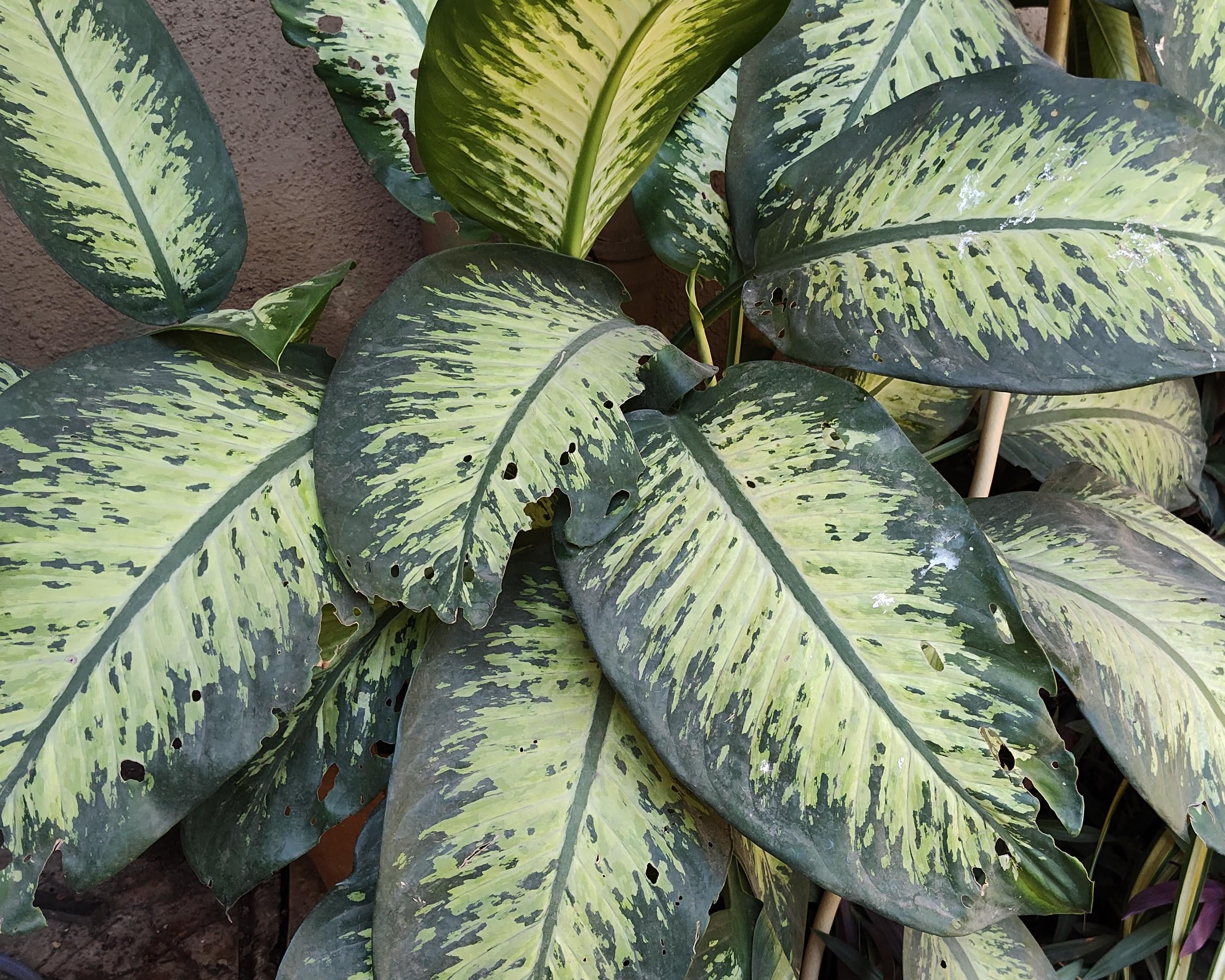
Obwohl es schön aussieht, kann es durchaus Schaden anrichten.
Stumpfrohr (Dieffenbachia) kann vorübergehende Blindheit, starke Augenschmerzen und potenzielle Hornhautschäden verursachen, wenn der Saft der Pflanze, der nadelartige Calciumoxalatkristalle (Raphiden) enthält, in direkten Kontakt mit den Augen kommt. Auch wenn das Reiben der Augen nach dem Umgang mit der Pflanze oft vorübergehend ist, kann es zu schweren Augenreizungen und -schäden kommen.
Sicherheitsvorkehrungen: Tragen Sie beim Beschneiden oder Umgang mit Dieffenbachia immer Handschuhe, waschen Sie sich unmittelbar danach gründlich die Hände und halten Sie die Pflanze von Kindern und Haustieren fern.
Ich habe vor Kurzem von dieser Information erfahren und habe diese Pflanze vorsichtshalber umgehend aus meinem Garten entfernt. Ich dachte, das wäre wichtig genug, um es hier zu teilen.
Von: Acumen_RJ
10 Comments
Most aroids contains calcium oxalates. It’s just what it is.
Out of the 200 plants I own, only the ones in Marantacea are consistently non-toxic.
Always a good practice to know which are which, but there are more harmful plants in the forest surrounding me than Dieffenbachias. Couldn’t possibly remove all. Just always be careful, wash hands after, do not touch eyes or mouth – and teach children the same.
Just starting to plan our garden at our new house (unchained from container gardening after three long years, YAY) and I love the look of Dieffenbachia, but was not yet aware of these risks.
So yeah, THANK YOU! 🙏 ❤️
Just keep in mind that Dieffenbachia is not particularly unique in this and their toxicity in the plant world is still relatively mild. Calcium oxalate is very common. And there are lots of toxic common plants around that will cause seriously problem when consumed or having their sap came in contact with your eyes/skin/mouth. Still a good thing to keep in mind when you have kids and pets that can chew on houseplants though.
Euphorbia for example is a very very large genus with different shape and size, from cactus-like to normal looking like Poinsettia. But they all have one thing in common: their milky sap, itchy when touching your skin and much bigger issue if it’s your eyes.
Accidentally snapped a large thick member of this family of plants and juice droplets splashed on my face. It burned and made a little irritated spot. I was lucky it didn’t catch me in the eyes.
Loads of plants do, just don’t eat it
And then there’s Oleander…..
Also called dumbcane for a reason
There’s a great video on YouTube that goes into the history of it. Apparently, it was planted next to Caribbean slave’s quarters and would be rubbed into their mouths as punishment
Edit: I’m not sure if it’s okay to post links? If not I’ll remove!
https://youtu.be/wg7kn1mI2Ro
The green parts of rhubarb leaves also have corrosive amounts of oxalic acid.
Thanks for your useful hints!👌👌👌👍🤝