
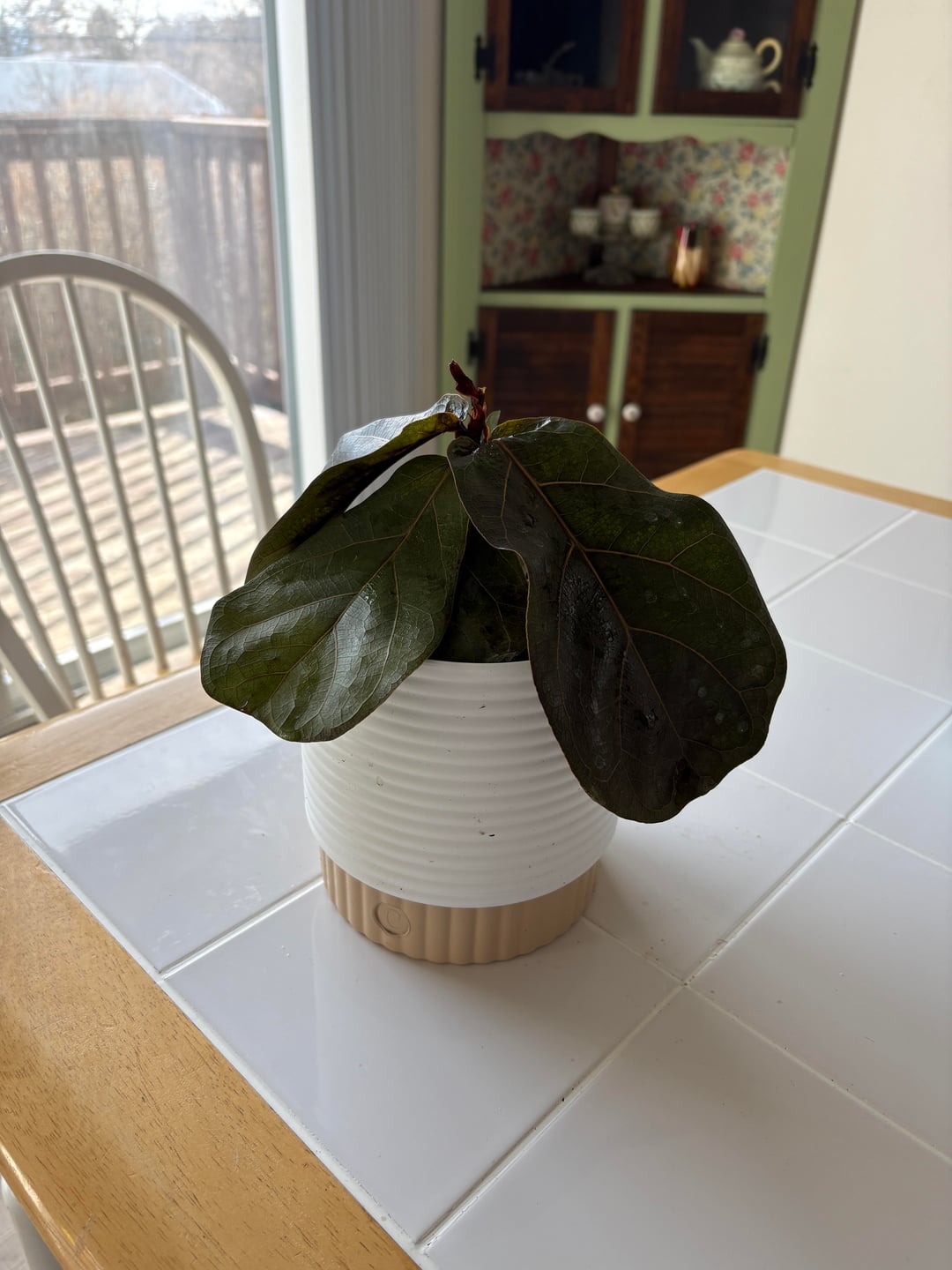
Hallo! Erst letzten Monat bin ich wegen des Studiums umgezogen. Vor ein paar Wochen habe ich unser Haus mit Pflanzen gefüllt und mich um sie gekümmert! Meine Mutter schickte mir per Post eine Geigenblattfeige, die bei ihrer Ankunft wirklich traurig aussah.
-Ich habe einige tote Blätter entfernt, sie regelmäßig in die Sonne gestellt und wöchentlich den Boden überprüft bzw. die verwelkten Blätter besprüht, von denen ich denke, dass sie wiederhergestellt werden könnten.
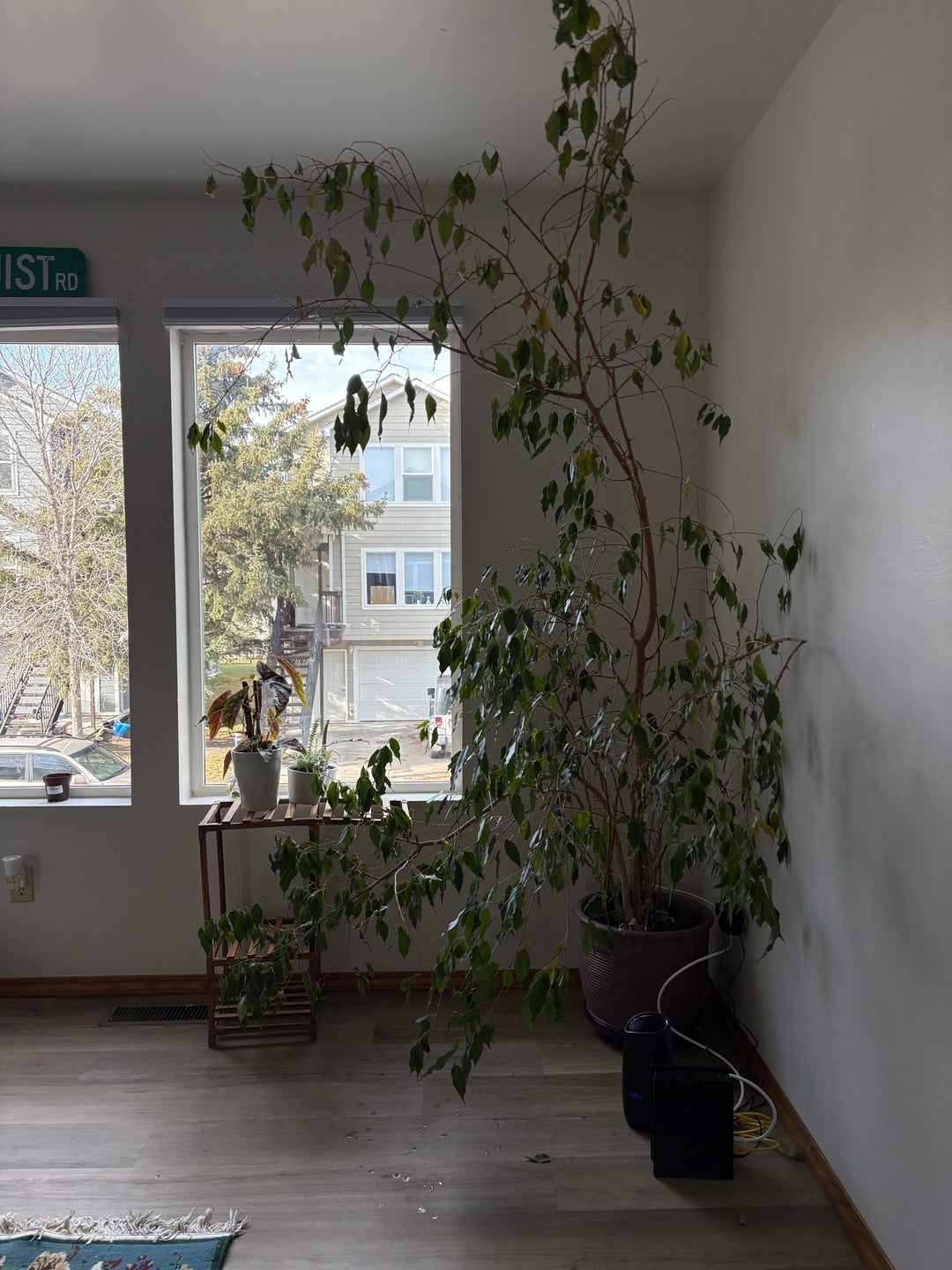
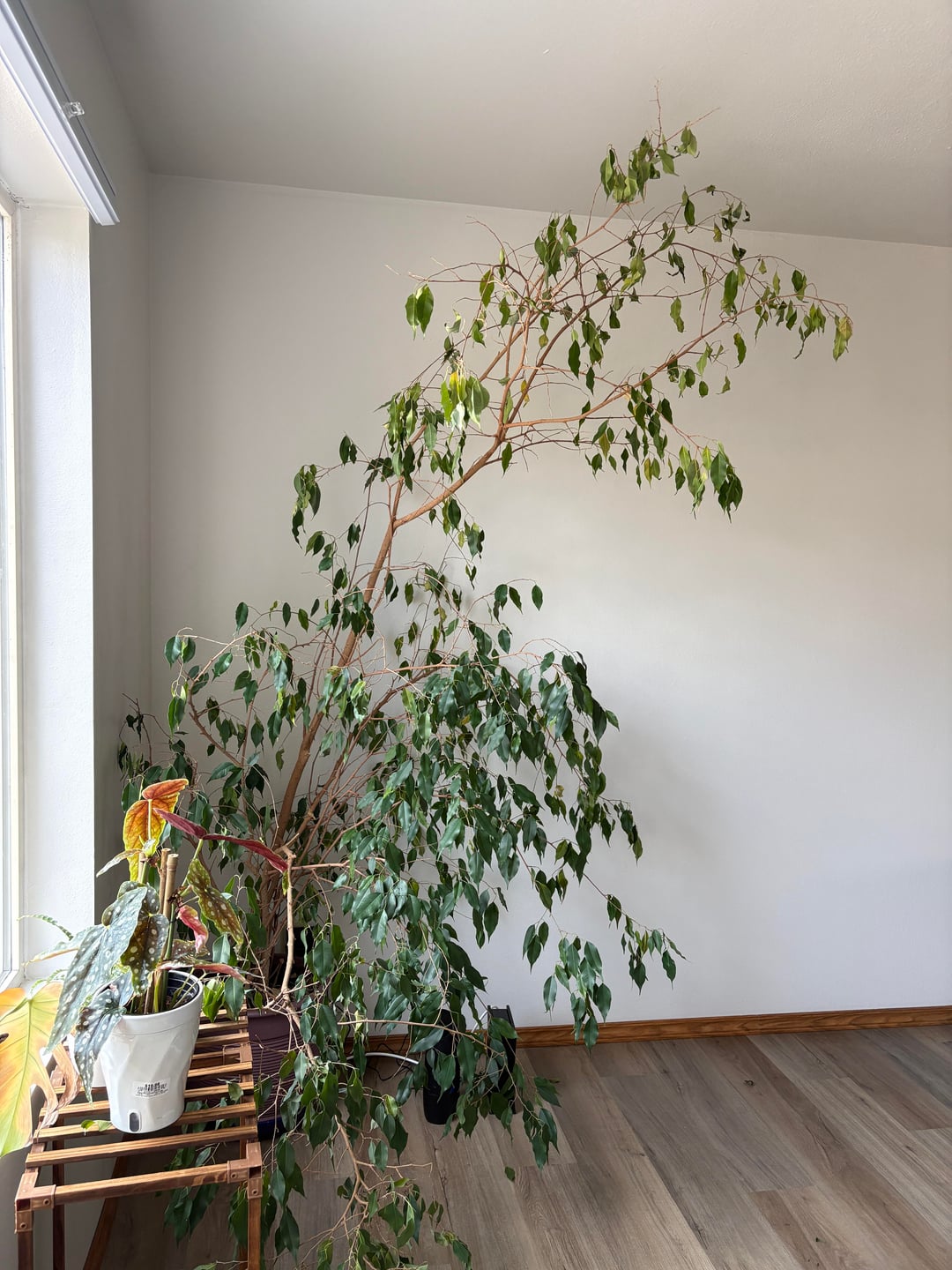
-Ich habe diesen Ficus kostenlos auf dem Facebook-Marktplatz gefunden und er hat bisher wunderbar in unsere Wohnung gepasst! Letzte Woche habe ich einige vergilbte/welke Blätter bemerkt. Als ich den Boden überprüfte, stellte ich fest, dass alle Wurzeln fast vollständig an der Oberfläche und fest anliegen. Ich weiß nicht viel über Ficusbäume, daher bin ich mir nicht sicher, was sie davon halten, wurzelgebunden zu sein. Ich glaube, auch bei ihr ist es längst fällig, sie zu beschneiden, aber ich habe Angst, sie falsch zu schneiden.
Kurz gesagt: Wie könnte ich meine Geigenblattfeige retten? Wo sollte ich meinen Ficus beschneiden und sollte ich über ein Umtopfen nachdenken? Wir freuen uns über jede Hilfe, vielen Dank!
Von: Free_Permit_5937
2 Comments
For the fiddle leaf fig, I’m assuming you haven’t repotted yet? And if you have did you repot it with chunky aerated soil?
Grow houses use peat moss because it’s lightweight, sterile, holds moisture without drowning roots, and lets growers fully control nutrients and pH. It’s great for fast, uniform growth in controlled environments.
But when you bring a plant home, that peat becomes a problem. It stays wet too long indoors and can suffocate roots. Repotting into something chunky and aerated lets the roots breathe, dry properly, and prevents rot. So when you repot take a look at the roots. If you see mushy roots, cut them off with sterile scissors and soak in a diluted hydrogen peroxide bath, 2:1 water and HP.
Stop spraying the leaves, you’re going to cause fungal issues.
For the enormous ficus, it may need a repot. However personally, I would shave off the roots so you can put it back into that same pot so you can control the size better. It’s already a pretty big tree and the bigger pot you give it, it’s going to keep growing. These get 40’ in the wild. Go chunky and aerated.
Here are some instructions if you want to prune the roots:
Take the plant out of the pot and gently loosen the soil so you can see the roots. Use sharp scissors or pruners that have been sterilized with alcohol. Trim no more than about 20–30% of the roots, focusing on the long circling roots around the outside and bottom. Avoid hacking into the dense core and don’t tear the roots, clean cuts heal faster.
Once trimmed, put it back into the same pot with fresh, chunky, well-draining soil so the roots can breathe.
If it’s winter and the plant already seems stressed, go lighter. Cut closer to 10–15% max, don’t prune the top, and keep conditions very stable. Bright light, warm temps, no drafts, and careful watering are key. If the plant is dropping a lot of leaves or looks really weak, it’s better to wait until spring unless the roots are actively rotting.
Happy to provide a soil recipe if you’d like for both. I use aroid blends for both of these.
My fiddle leaf loves its self watering pot and being by the window!