
Hallo zusammen,
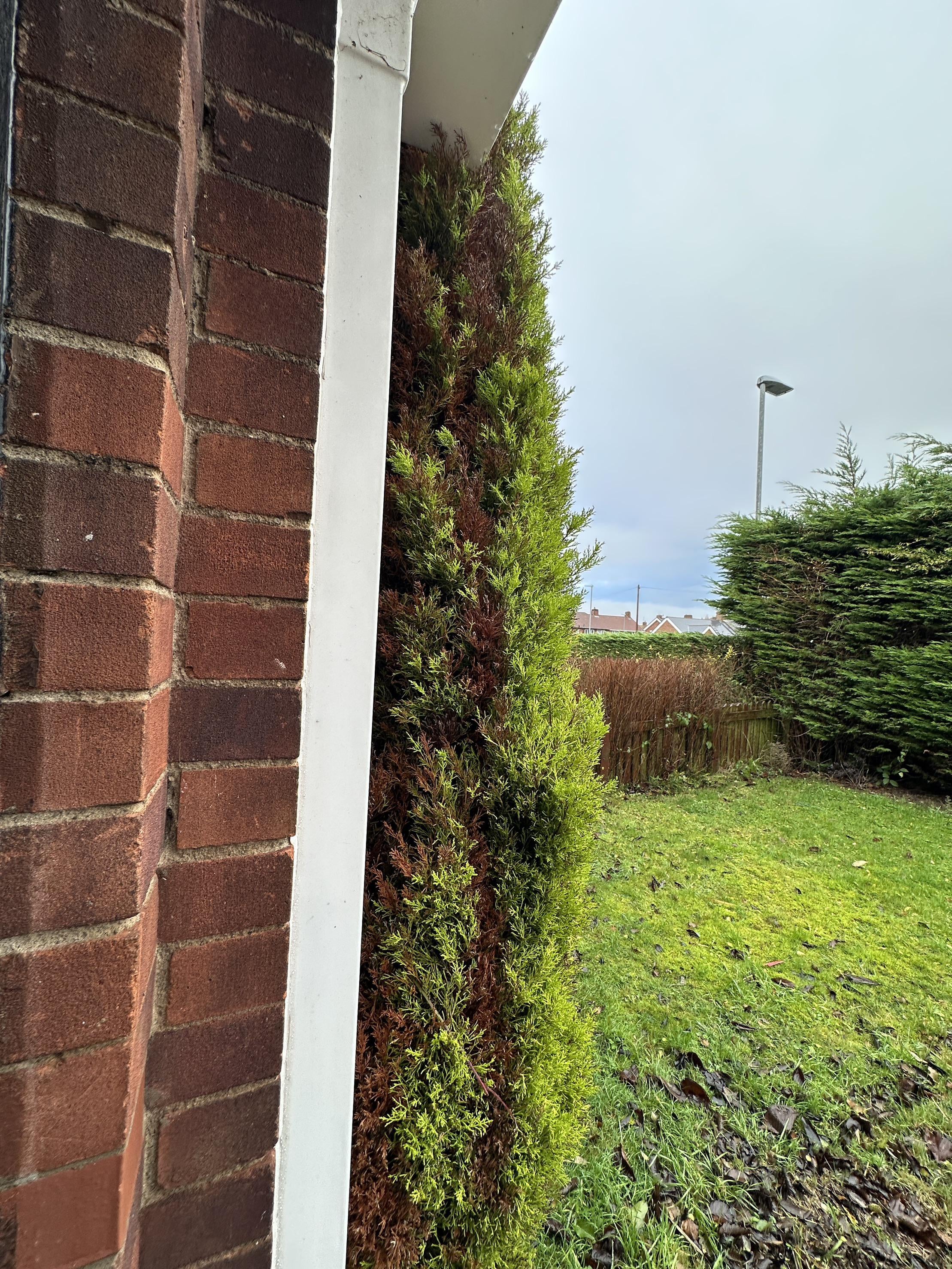
Ich bin kein Gärtner, aber dieser Baum hat begonnen, Brauntöne anzunehmen. Ist es völlig tot? Ich habe ein schlechtes Gewissen, weil ich es vernachlässigt habe. Wenn eine kleine Chance auf eine Wiederbelebung besteht, würde ich mich über jeden Tipp freuen.
Es lehnt an der Außenwand des Hauses ab und berührt die Oberkante des Fensters im Obergeschoss.
Von: _ArhTee
11 Comments
It’s probably where it’s been cut, unfortunately fir trees don’t like it much and once they turn brown the rest of the tree is still healthy. Maybe think about removing the stealthy giant and put a colourful shrub there.
It’s not too late, it’s the right time…to remove it. Fir trees can get huge and their roots can cause structural damage. Definitely take it out. There are so many attractive shrubs that will do no harm to your foundations.
For winter interest and hungry bees woken by warm winter days, a winter flowering clematis will add so much to your kerb appeal and your senses.
I can highly recommend Clematis cirrhosa ‘Freckles’, scented, pretty, evergreen with pretty small leaves, not vigorous. I have mine growing on metal mesh around the downpipe. They love their feet in the shade and heads in the sun at least half of the day.
I would ‘let’ it go.
Its a really odd planting decision to slap a conifer tight up against a house wall anyway.
The first thing I did when I moved into my current house was to remove all the evergreens that had long ago been planted as miniatures. They were by then no longer miniature. They were dominating the garden, poisoning the soil and offering nothing to wildlife or other plants.
Your hedge is not native. Your house hugging tree is not native and doesn’t respect your foundations.
I think the house hugging tree does not even like its position. Not that it cares about your house. It was once just a slightly decorative miniature evergreen.
So. I am a little biased. But for good reasons.
My answer? No, it is not too late to save your garden from these plants. You have so much choice of what to replace them with. None of which could co-exist with your current plants. The longer you leave it, the more difficult and expensive it becomes to replace them.
I know what I would do. But it is your choice.
What’s the easiest way to remove this tall lassie?
Oh get it out! Terrible place for any tree and conifers aren’t worth worrying about bless them! It’s going brown probably because it’s right up against the bricks.
remove! too close to the house.. lots of options depending what your preferences are and whether you want tidy versus other .. plant nothing with invasive / strong root systems .. whoever planted it there was possibly not thinking about the structural integrity of your property? 🙂
I work in landscaping and I’m forever pulling out trees planted in such places usually only after the owner has been hit with a 4 grand bill to fix the damage to the foundations.
You might be able to save it with a good trim and proper watering. A pro arborist could give you the best shot though.
This species grows in exactly this way. It doesn’t matter where it lives; your garden or a forest, it always presents as 80% dead. The ‘dead’ parts fall off onto the ground, and their acidity conditions the soil so no competition can grow there, except small weeds like nettles.
But having such a species against your house is a terrible idea. Their roots are evolved to grow shallow and wide I.E. into and under your foundations.
Get rid of it ASAP. Cut it down to the stump and hammer copper nails into the stump.
It’s the least destructive way.
It might bounce back with pruning and better airflow; these trees are tougher than they look.