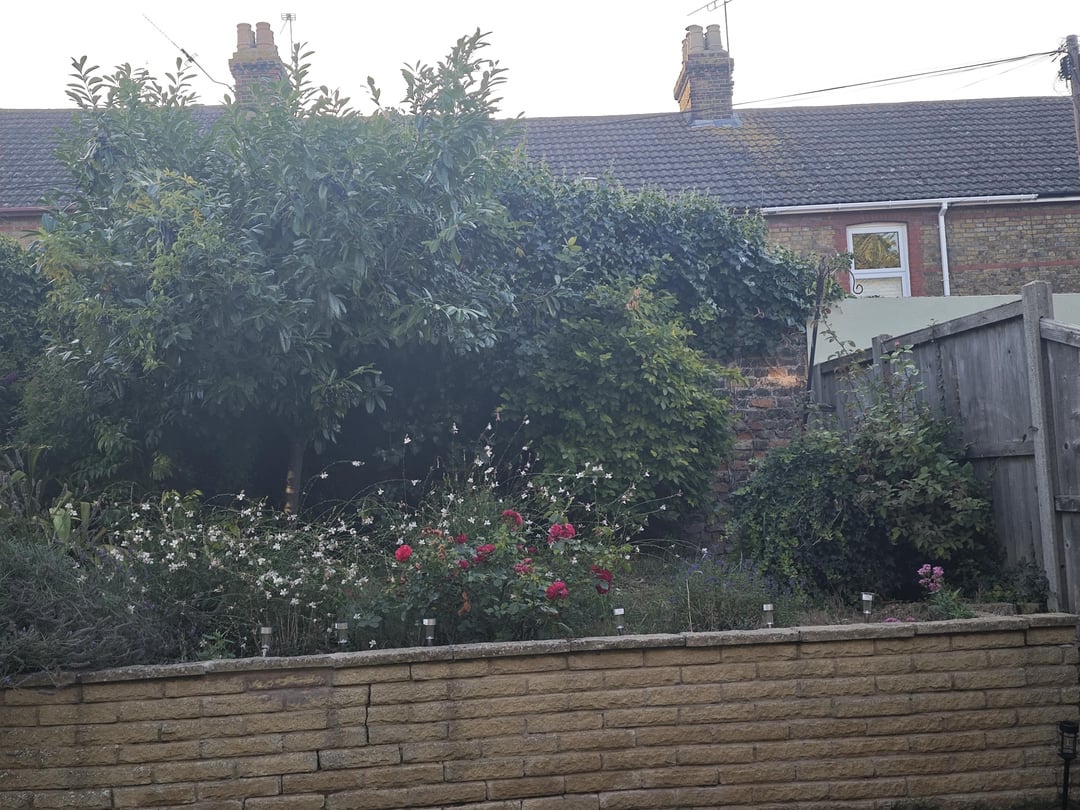
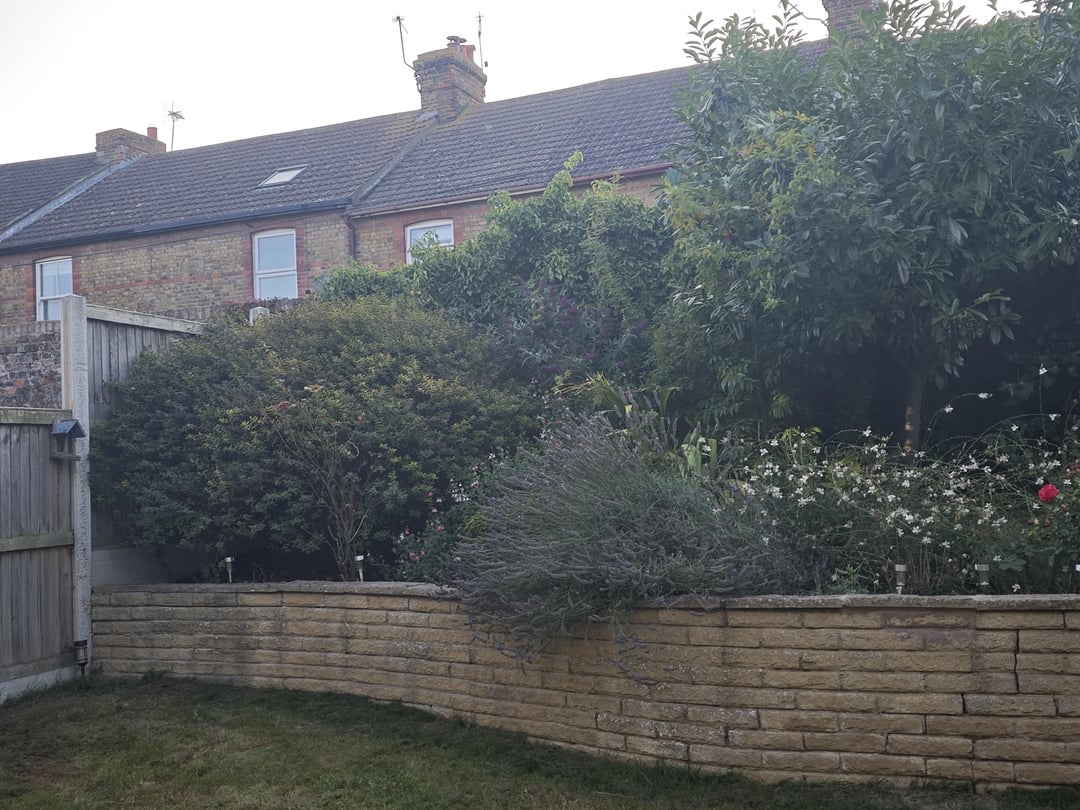
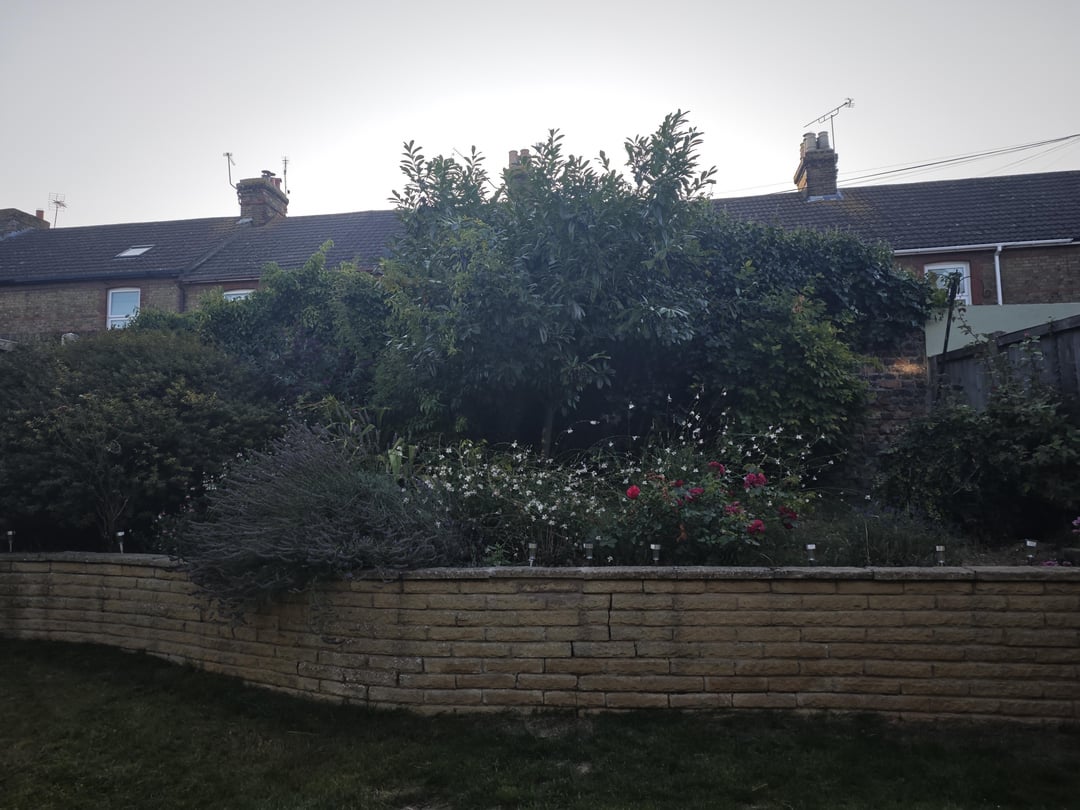
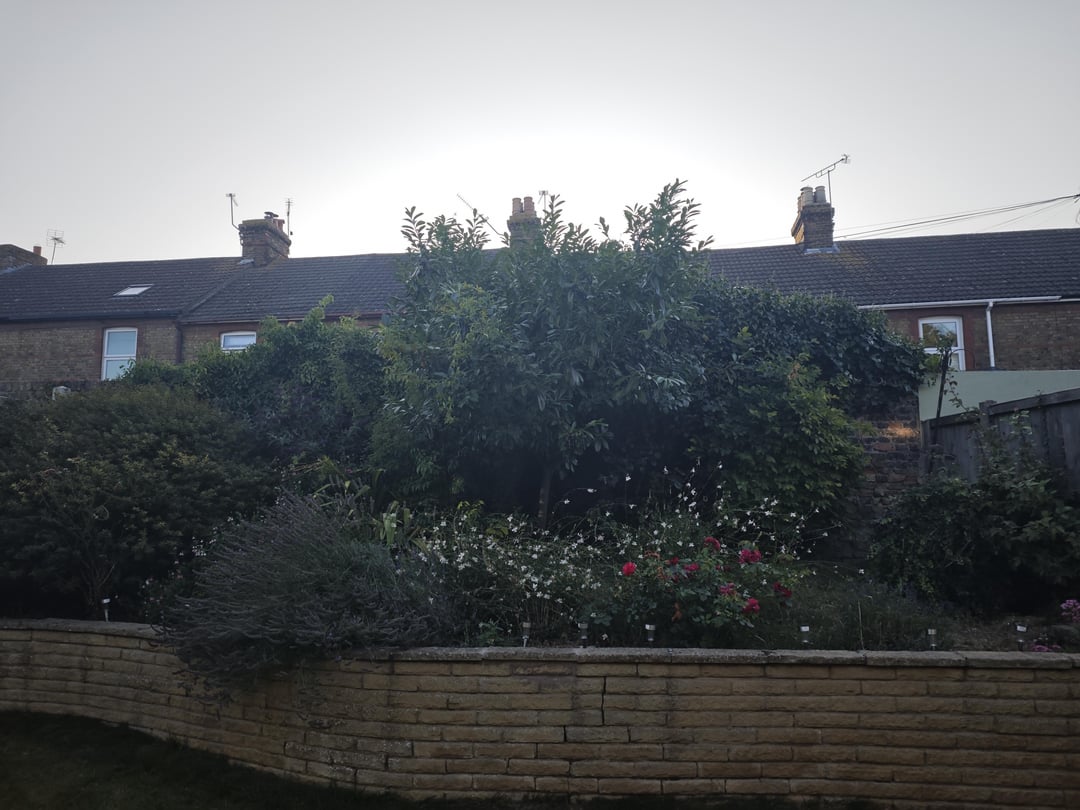
Looks like you’ve got a garden that slopes up, away from the house, and there’s a raised bed at the back. Is that correct?
I’d want to see it at more times of year, and see the overall shape of the garden. I’d also want to know what you want to use the garden for: looking at, sitting and eating in, growing veg, etc.
That said, I would immediately:
1. Check whether the retaining wall is sound: it looks like there may be some mortar cracks. This would be the first priority to fix.
2. Check whether the plants are healthy (they look it!) and there are no persistent weeds like bindweed, horsetail, etc. in there.
3. Watch the garden for a year: are there times when it’s boring/uninspiring? Does it all look dead in winter, or barren and empty in spring, etc.? (it looks like there’s a good balance of plants but it’s hard to tell from the phot).
Decide what you want from the garden, and look at the overall shape; once you get the shapes right, filling in the planting is (relatively) easy.
luala on
This looks like a deep raised bed, it’s hard to see what’s in it but I can spot a salvia “hot lips” , Gaura, roses and lavender. These are all pretty independent plants. You could deadhead those roses for ongoing flowering and I’d water them in very dry weather. Maybe give them a feed in spring next year.
Some people cut the salvias right back in summertime with the hope of repeat flowering. I am not one of those people.
I can’t make out what the bigger stuff at the back is but I see an ivy on the rear wall. This I would trim at least once a year to stop it getting too bulky.
For now I suggest you buy a decent (£15-30) pair of secateurs and chop back as needed. There are a few spaces you could add stuff if you wanted. This looks good to me but you might find it needs some colour in spring/winter, in which case you could add bits you like for those seasons. For example, you could bung some spring flowering bulbs in this autumn.

2 Comments
Looks like you’ve got a garden that slopes up, away from the house, and there’s a raised bed at the back. Is that correct?
I’d want to see it at more times of year, and see the overall shape of the garden. I’d also want to know what you want to use the garden for: looking at, sitting and eating in, growing veg, etc.
That said, I would immediately:
1. Check whether the retaining wall is sound: it looks like there may be some mortar cracks. This would be the first priority to fix.
2. Check whether the plants are healthy (they look it!) and there are no persistent weeds like bindweed, horsetail, etc. in there.
3. Watch the garden for a year: are there times when it’s boring/uninspiring? Does it all look dead in winter, or barren and empty in spring, etc.? (it looks like there’s a good balance of plants but it’s hard to tell from the phot).
Decide what you want from the garden, and look at the overall shape; once you get the shapes right, filling in the planting is (relatively) easy.
This looks like a deep raised bed, it’s hard to see what’s in it but I can spot a salvia “hot lips” , Gaura, roses and lavender. These are all pretty independent plants. You could deadhead those roses for ongoing flowering and I’d water them in very dry weather. Maybe give them a feed in spring next year.
Some people cut the salvias right back in summertime with the hope of repeat flowering. I am not one of those people.
I can’t make out what the bigger stuff at the back is but I see an ivy on the rear wall. This I would trim at least once a year to stop it getting too bulky.
For now I suggest you buy a decent (£15-30) pair of secateurs and chop back as needed. There are a few spaces you could add stuff if you wanted. This looks good to me but you might find it needs some colour in spring/winter, in which case you could add bits you like for those seasons. For example, you could bung some spring flowering bulbs in this autumn.